Petrography and rock saws are awesome!
I got the chance to sit in on some of the geology rotations today. It was more fun than doing all the stuff I otherwise should be. First off was petrography. Did you realize that if you slice rocks thin enough, you can see through them (being a little facetious)? You can indeed. By doing so, you can see how the mineral crystals formed, get a good idea of what they are made of, and tell a history of how they changed over time. I know, this was new to me too.
The highlight was looking at a sample of rock from the Gunflint Iron Formation (Northern Minnesota). This specimen came from a rock that is ~2 BILLION years old and there were nearly perfectly preserved fossils of filamentous microorganisms. No joke, this was an example of one of the oldest, best preserved microfossils anywhere. Did I mention that they were 2 BILLION years old? I am still reeling from it. Pretty darn cool for a microbiologist who is used to looking at modern filamentous microorganisms and trying to think about how they might tell us about ancient environments that are preserved in the rock record. There they were, right IN the rock record.
In the afternoon, I was also able to use the rock saws and rock polishers to cut and polish some of the stromatolites that I collected at Mt. Dunfee. Here is one of my favorites below. This is the top of a stromatolite that is 542 million years old. The layers of the ancient microbial mat are preserved in this rock. You can see the top of the stromatolite in the picture below.
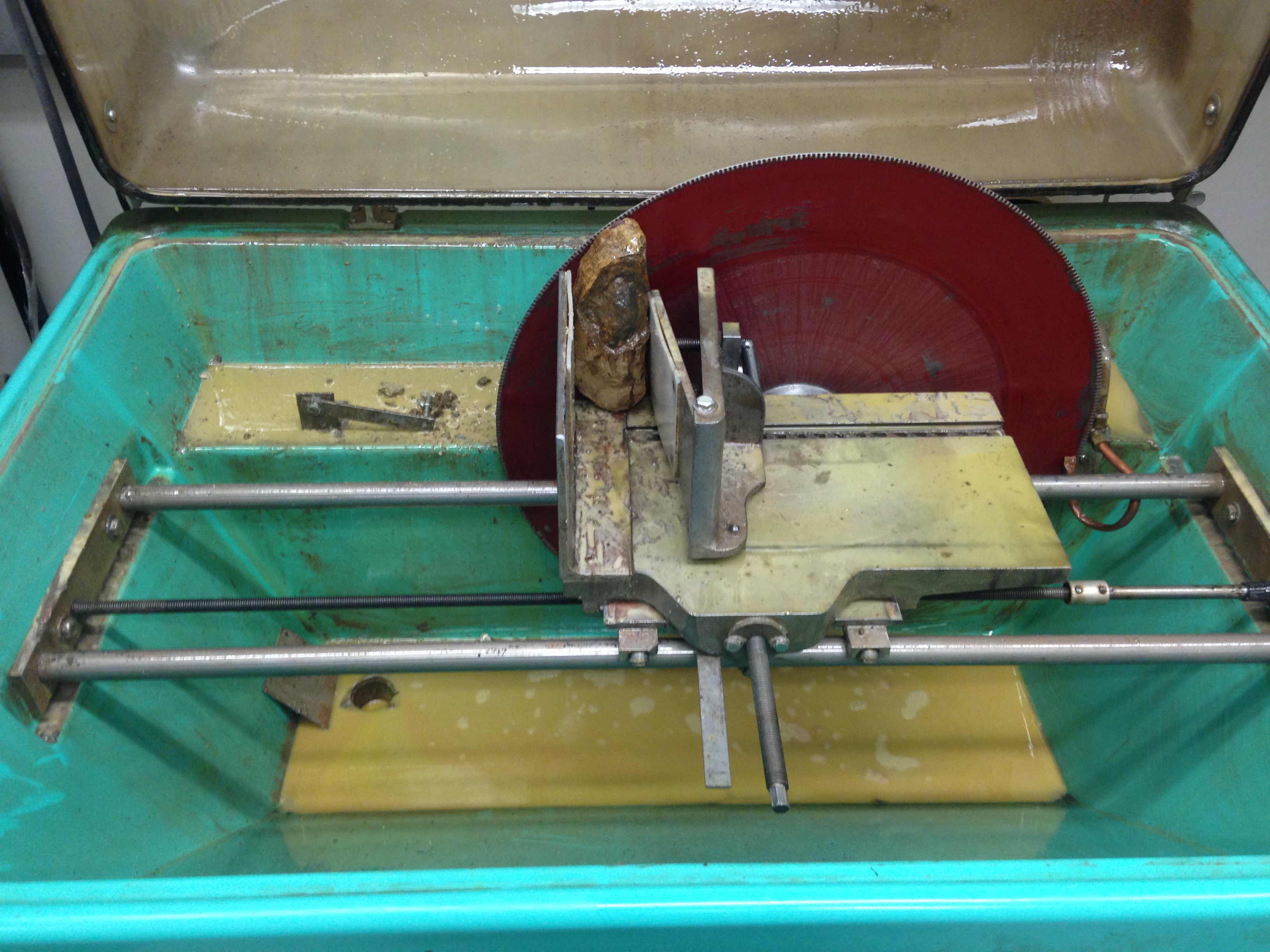
Rock saws are awesome.
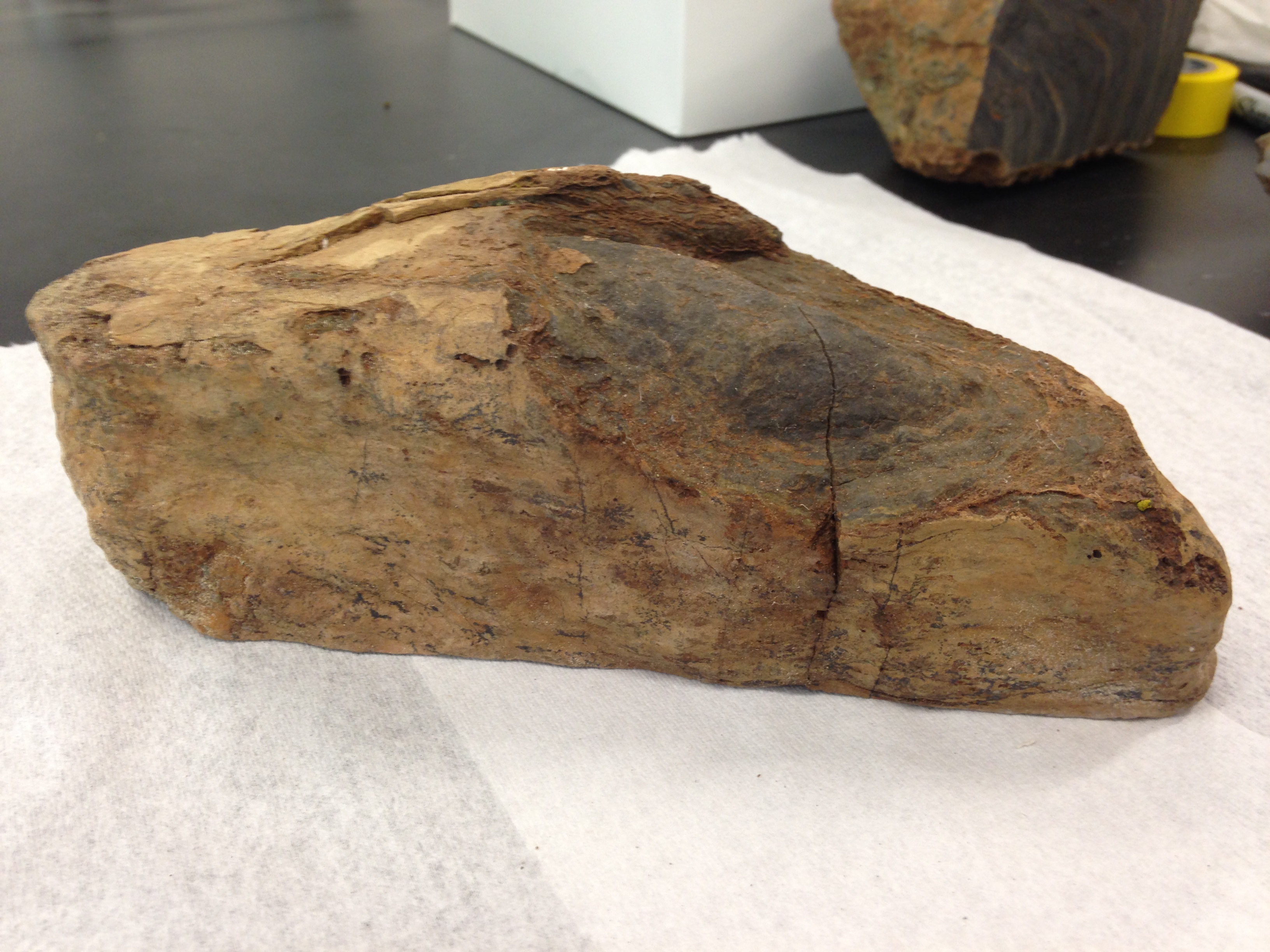
Turn it on its side to see the bottom…
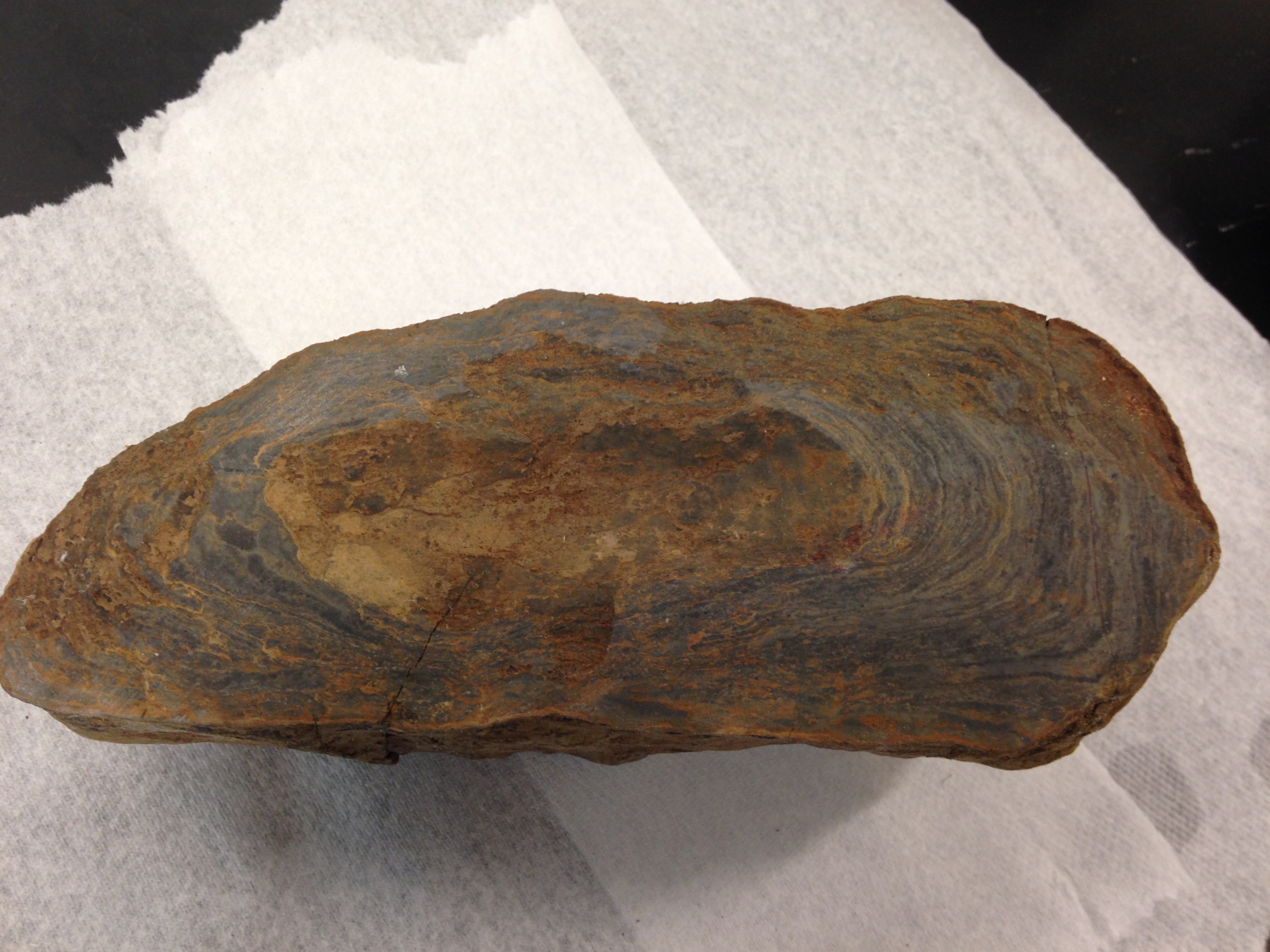 See the rings?
This is like the end of a loaf of bread.
Then I cut two other stromatolites in half to see the individual layers and stromatolites (individual towers).
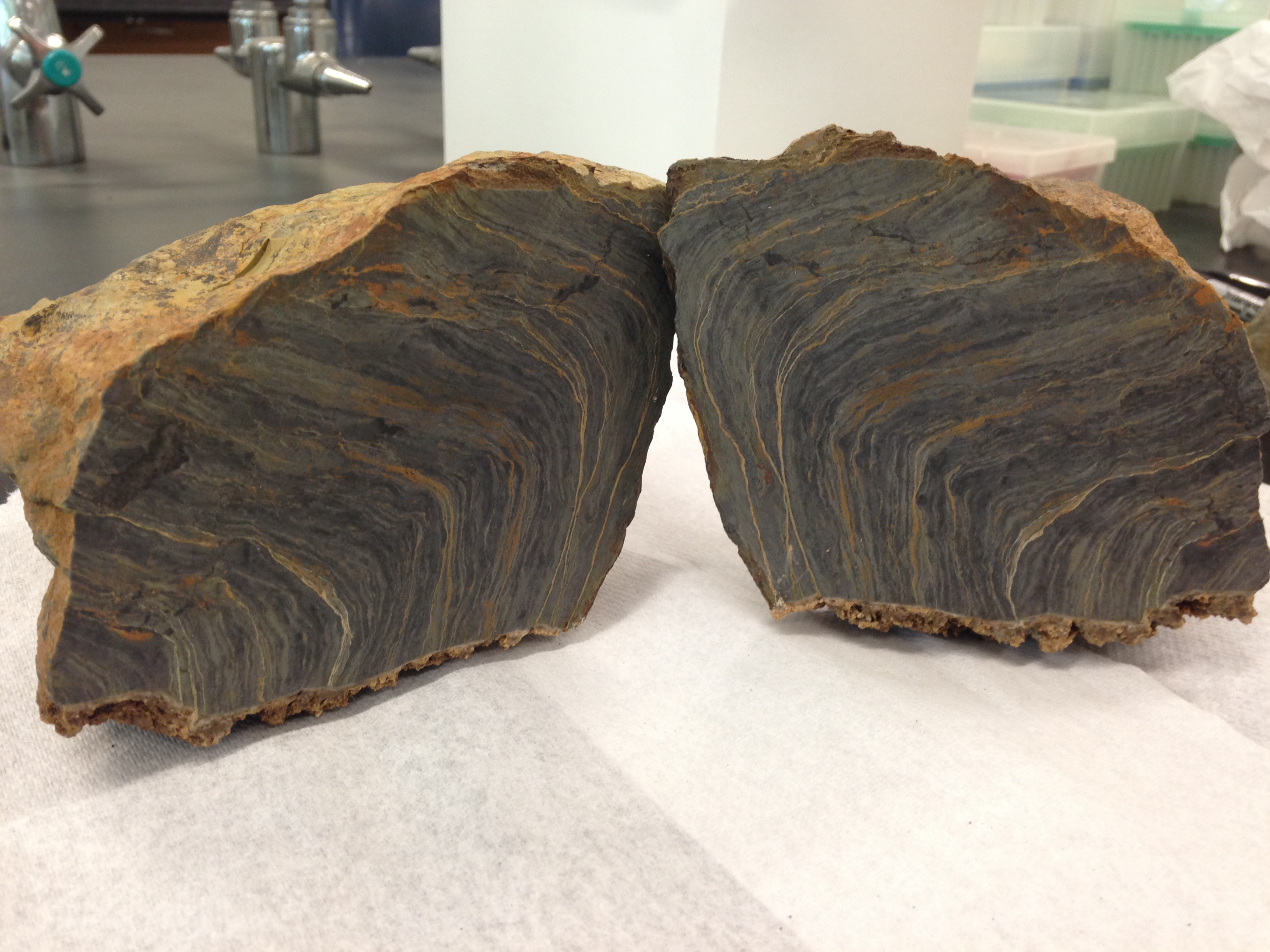
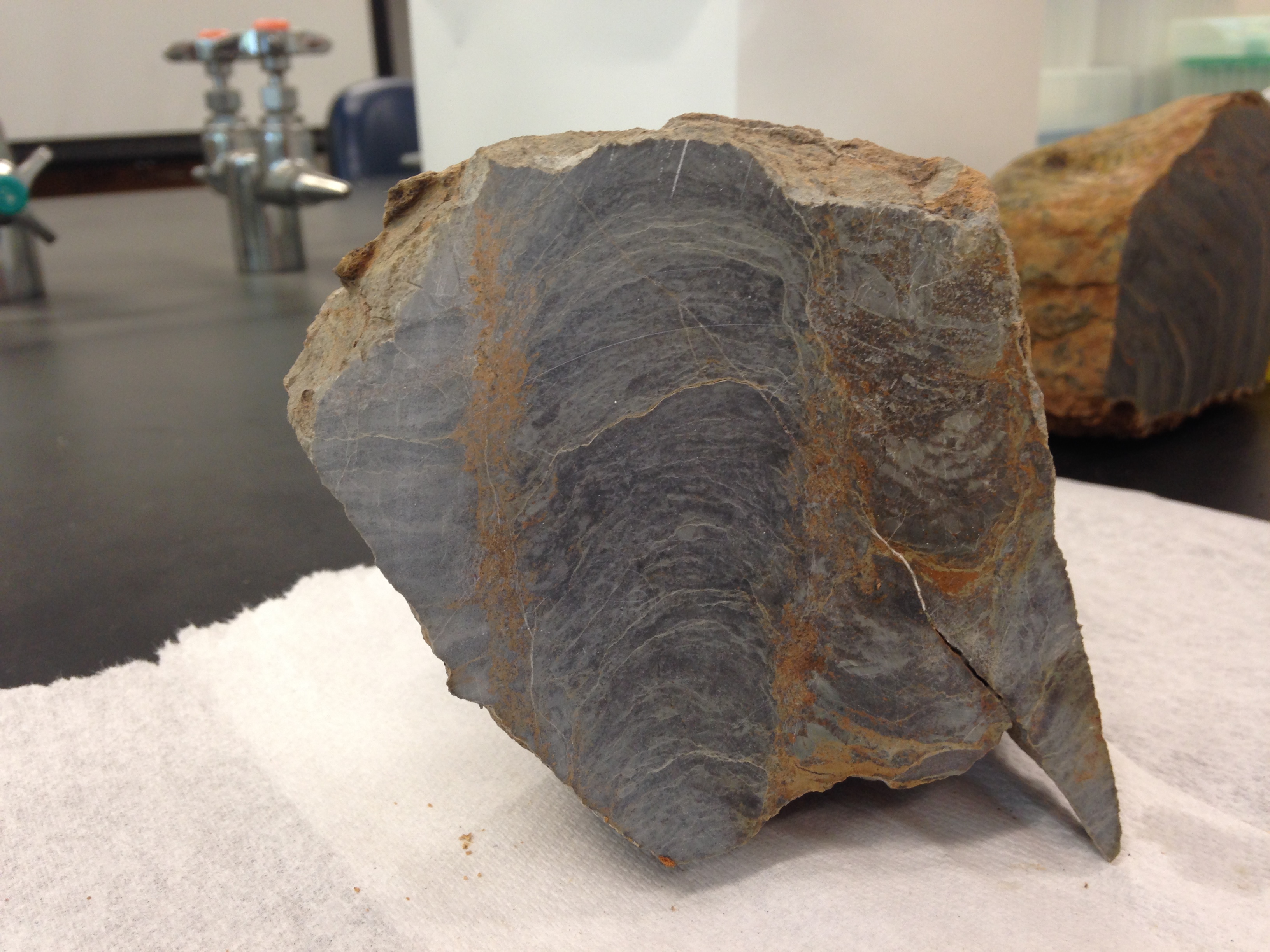
These are fossilized layers of microbial mats that get covered in something like silt or sand and then the microbes grow back over it, locking in the structure in the sediment of a shallow lake or sea. This was a time when there were very few forms of life that had shells or skeletons, making these some of the only fossils of life from this time in Earth’s history. Cool.

 bradleystevenson1120