Field Trip to The Jet Propulsion Laboratory
We travel over to Catalina Island tomorrow to start the last phase of the course. We have finished the two rounds of rotations at California State University Fullerton. All of our samples have been analyzed and the data are coming in. We will have a lot of analysis to do once we get to the Wrigley Marine Science Center. Here is a video that includes footage from last year’s course and some of Catalina, just awesome.
BUT, before that, we headed to NASA’s Jet Propulsion Laboratory!
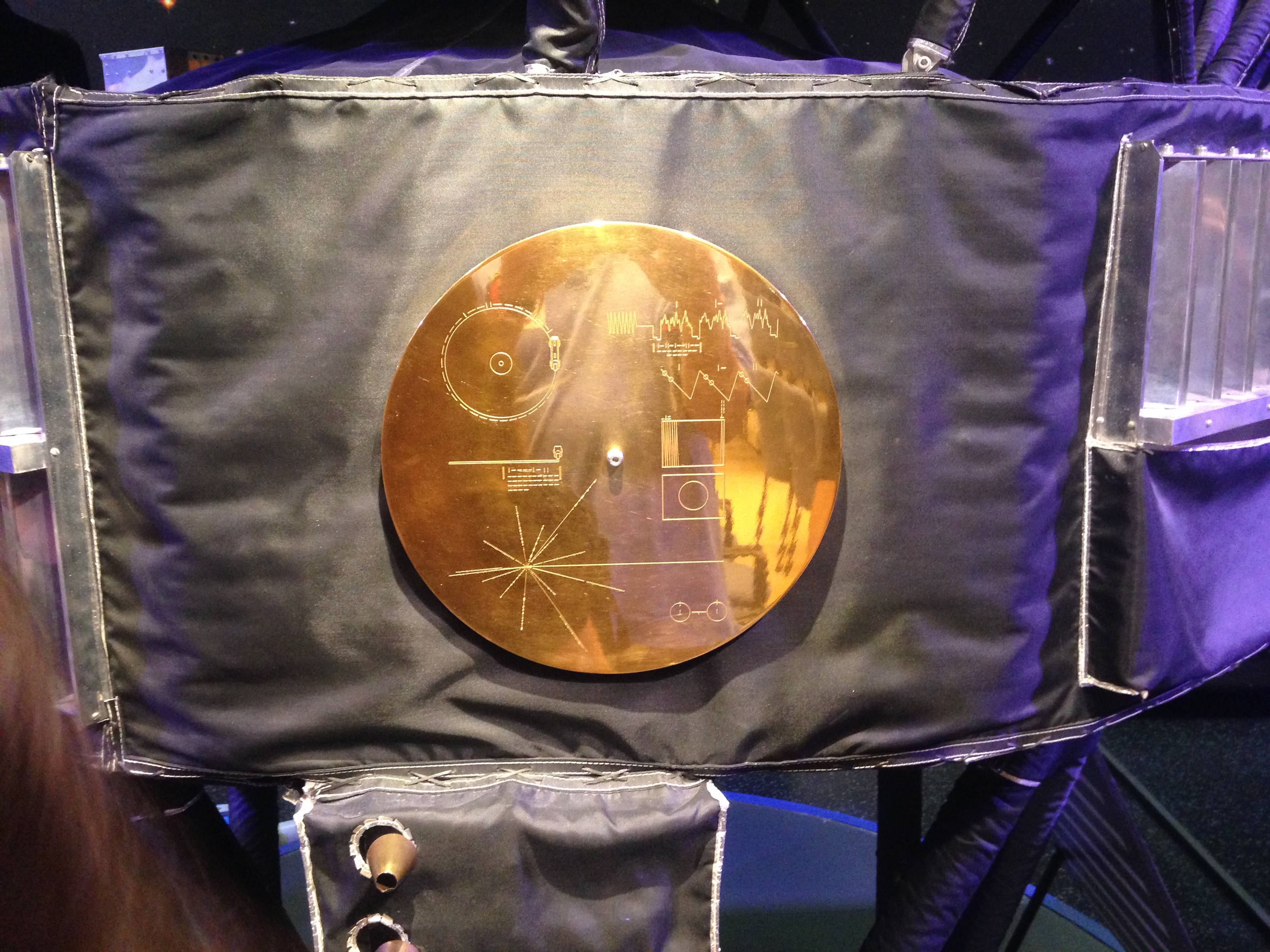
This is the plate/record (reproduction) on the side of the Voyager space craft.


Mars rover models, the evolution of size and mission.
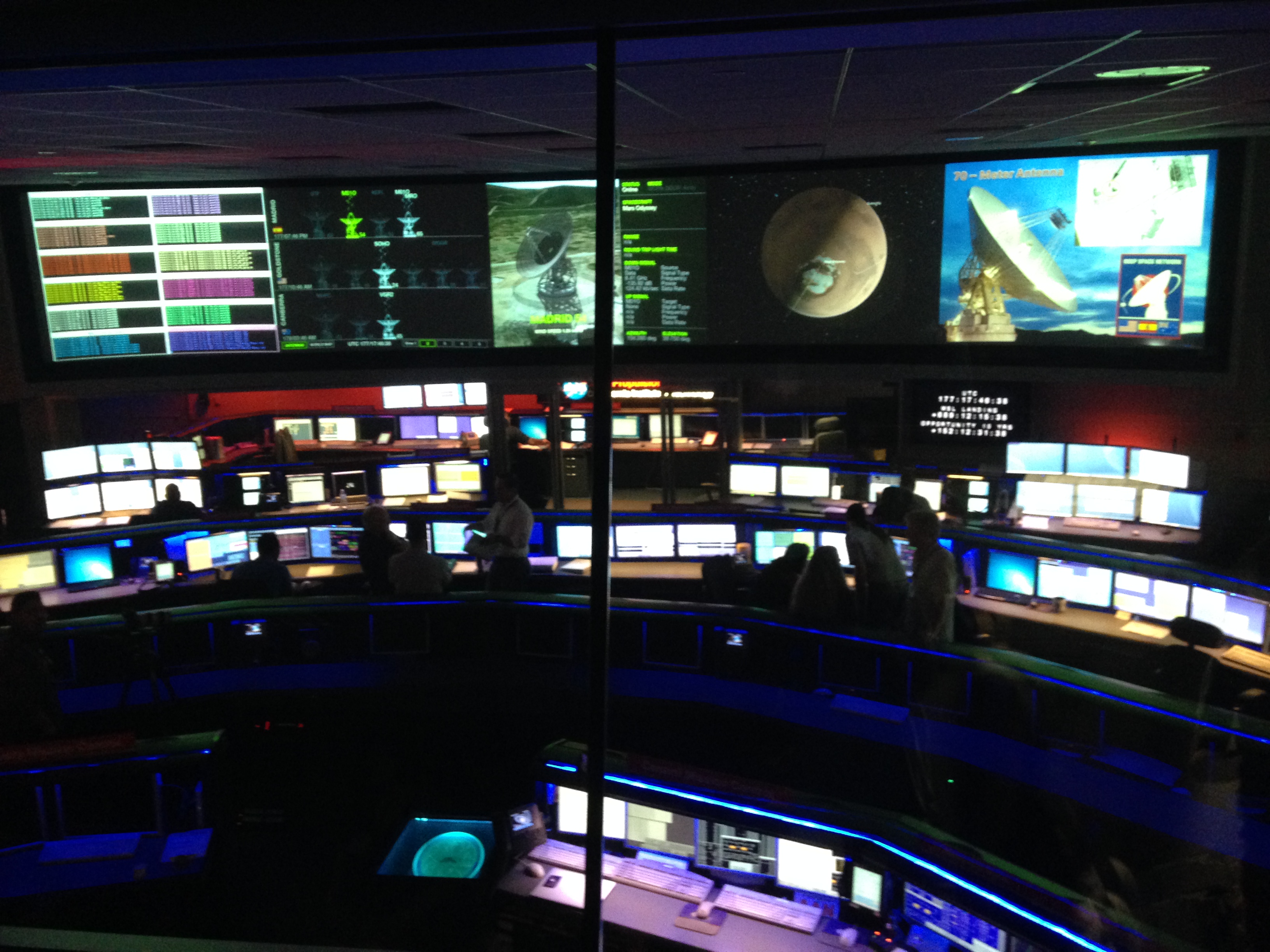
This is mission control for all unmanned/robotic space operations. We were watching data come in from all over our solar system. So damn cool.
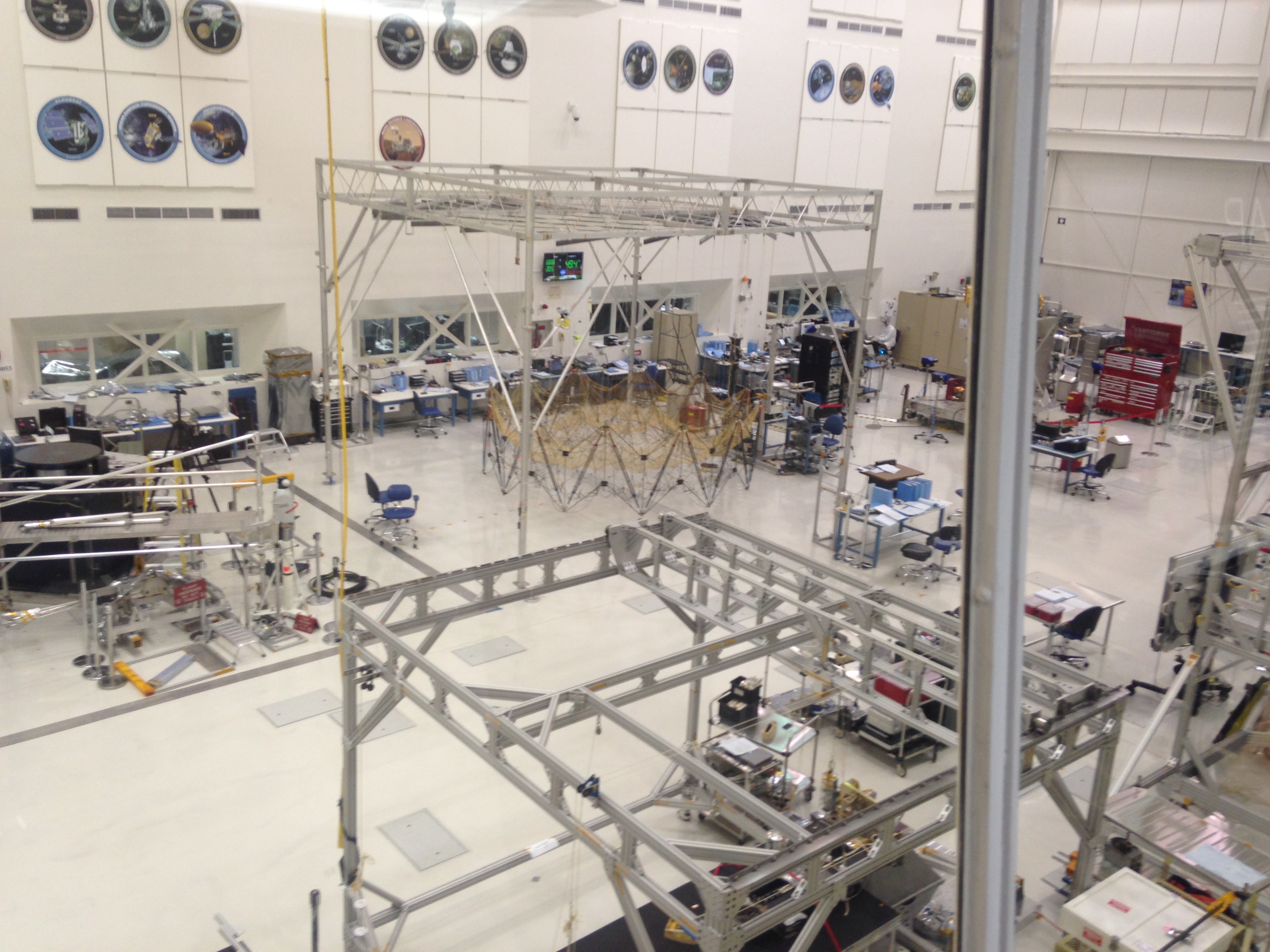
This is the spacecraft assembly room. They are putting together a satellite that will map soil moisture across the entire planet.
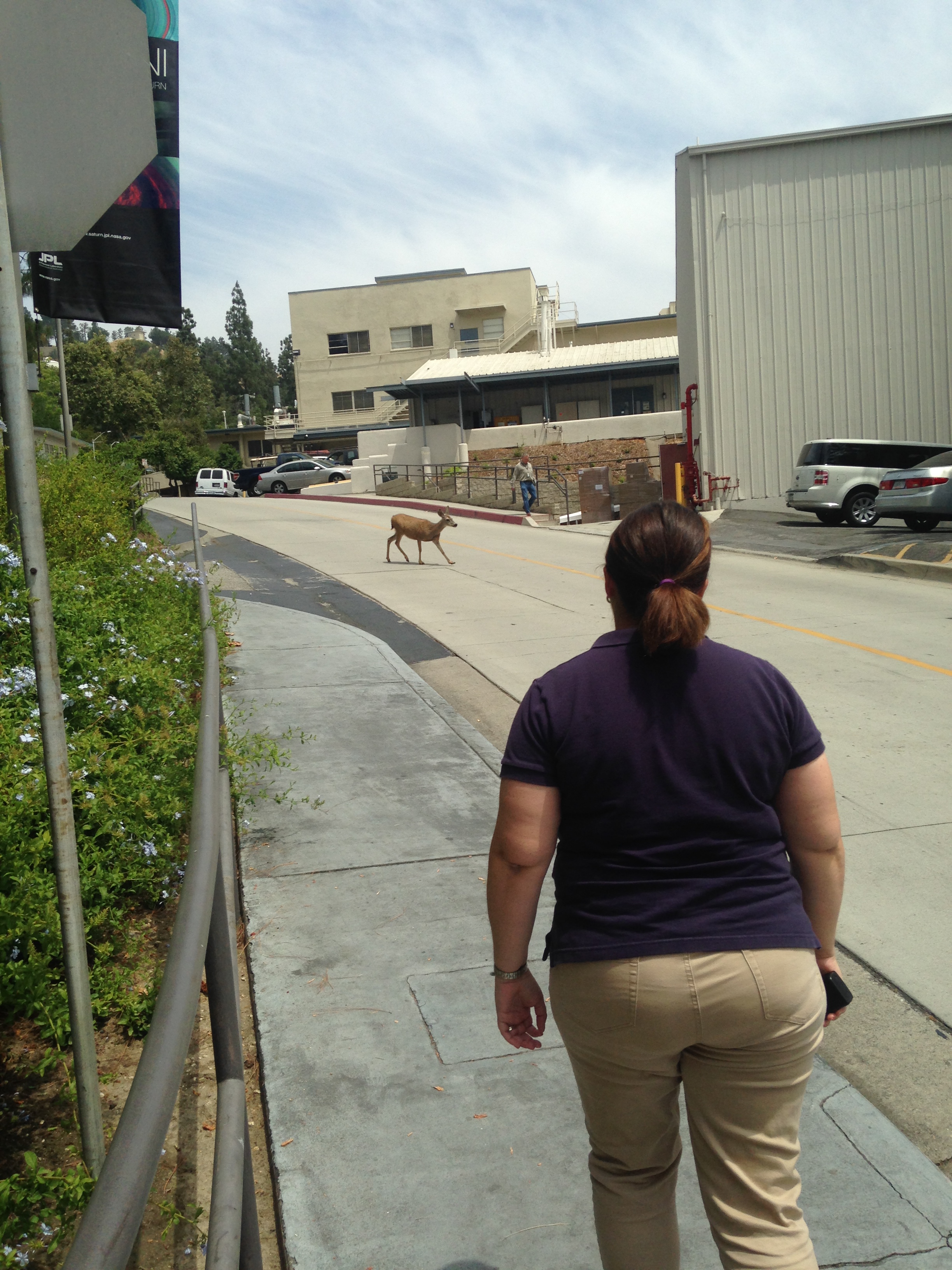
Deer stroll all over the facility. Proof.

This is the Mars yard, a playground for testing scenarios to predict performance of the mars rovers.
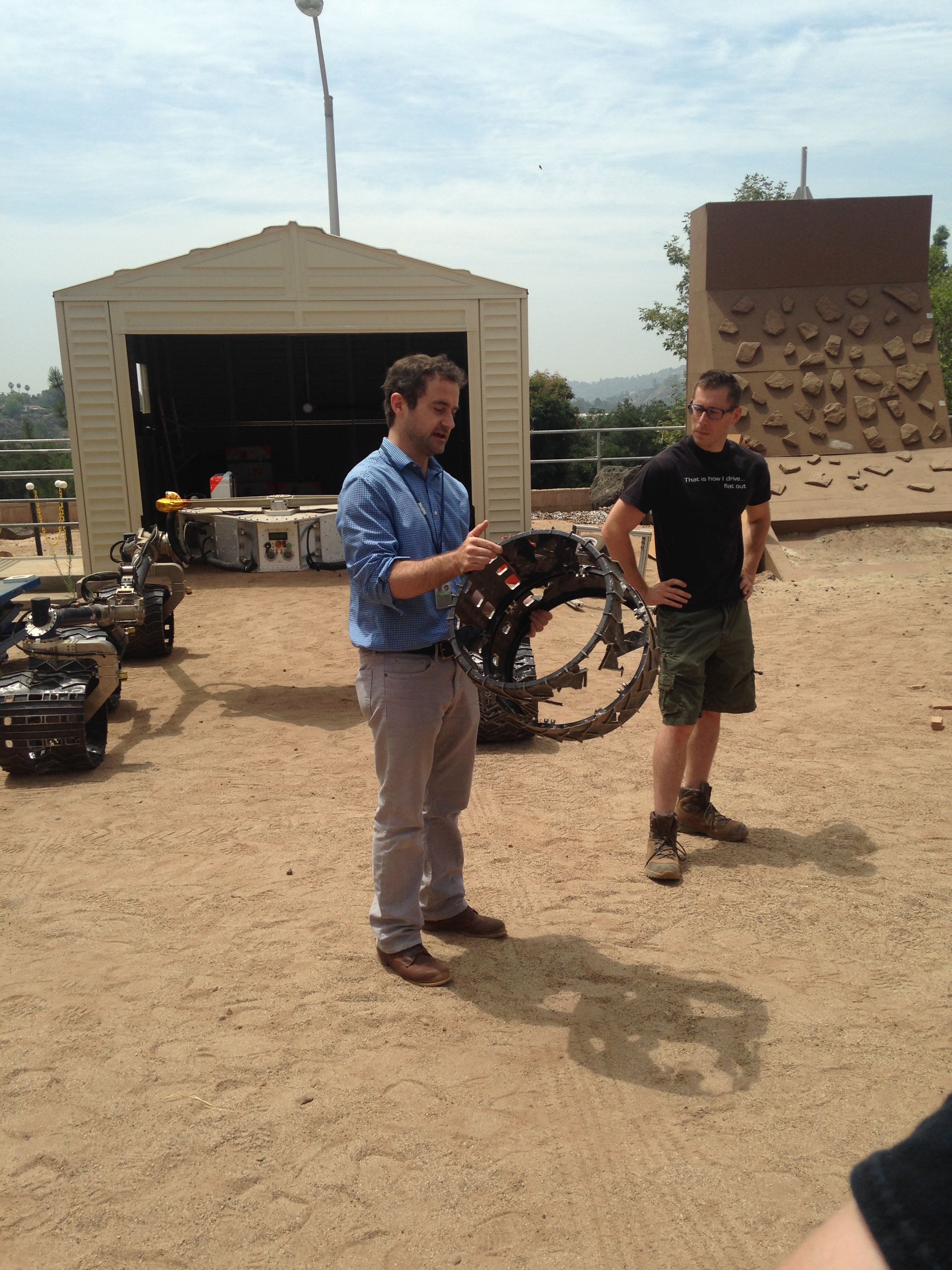
Kevin Hand is a Geobiology alumni, and now Deputy Chief Scientist, Solar System Exploration Directorate. He is showing us how the mars rover’s wheels are getting shredded on rocks of mars. Remarkably, they still provide sufficient thrust to stay functional.
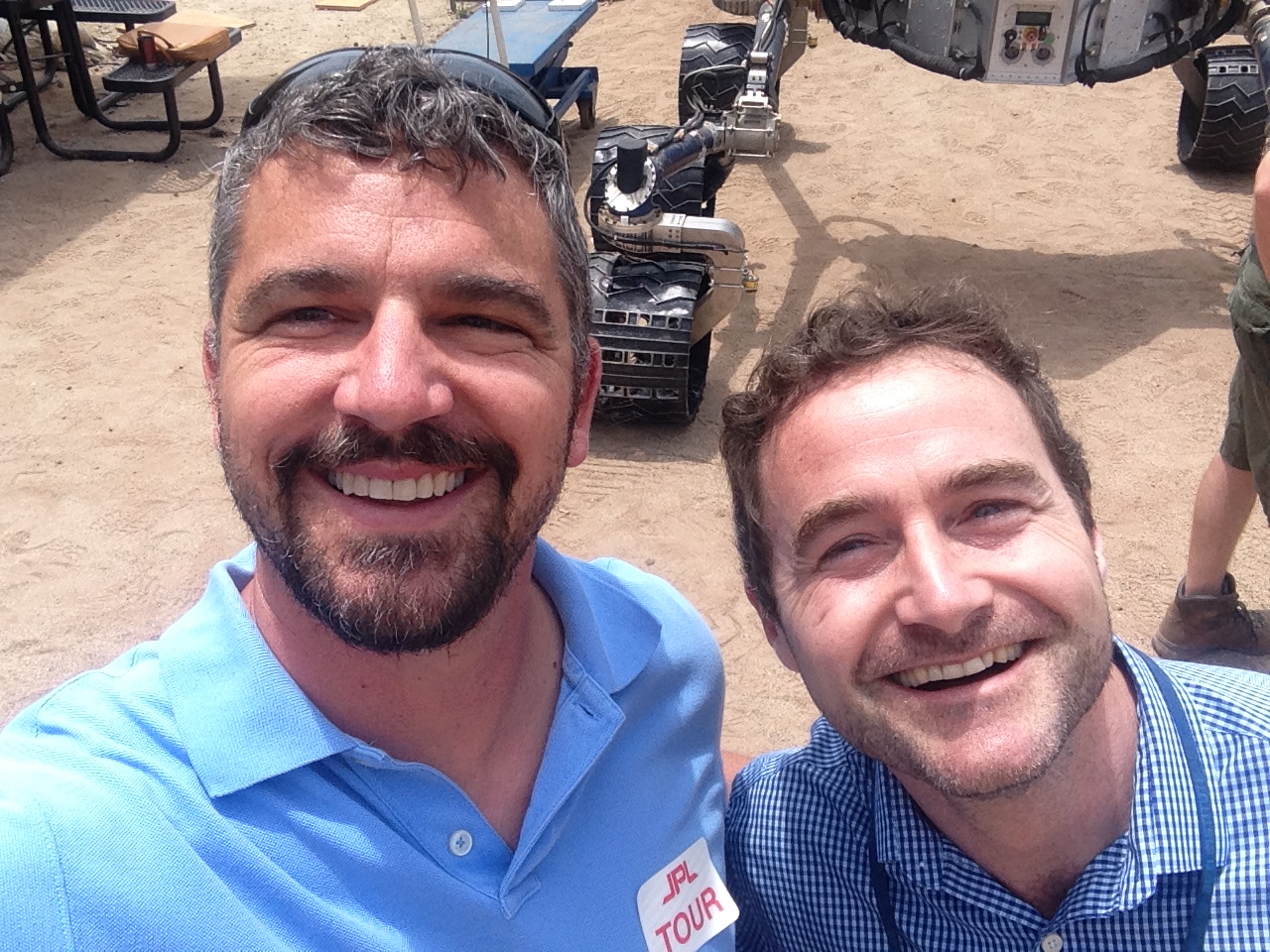
Kevin Hand and I take a selfie with the Mars rover simulator. Eat your heart out Ellen!
Cutting more rocks…
I went back up to the rock saw lab to help Victoria Petryshyn cut some of the larger stromatolites from Walker Lake. These are carbonates that are somewhere around 30,000 years old. 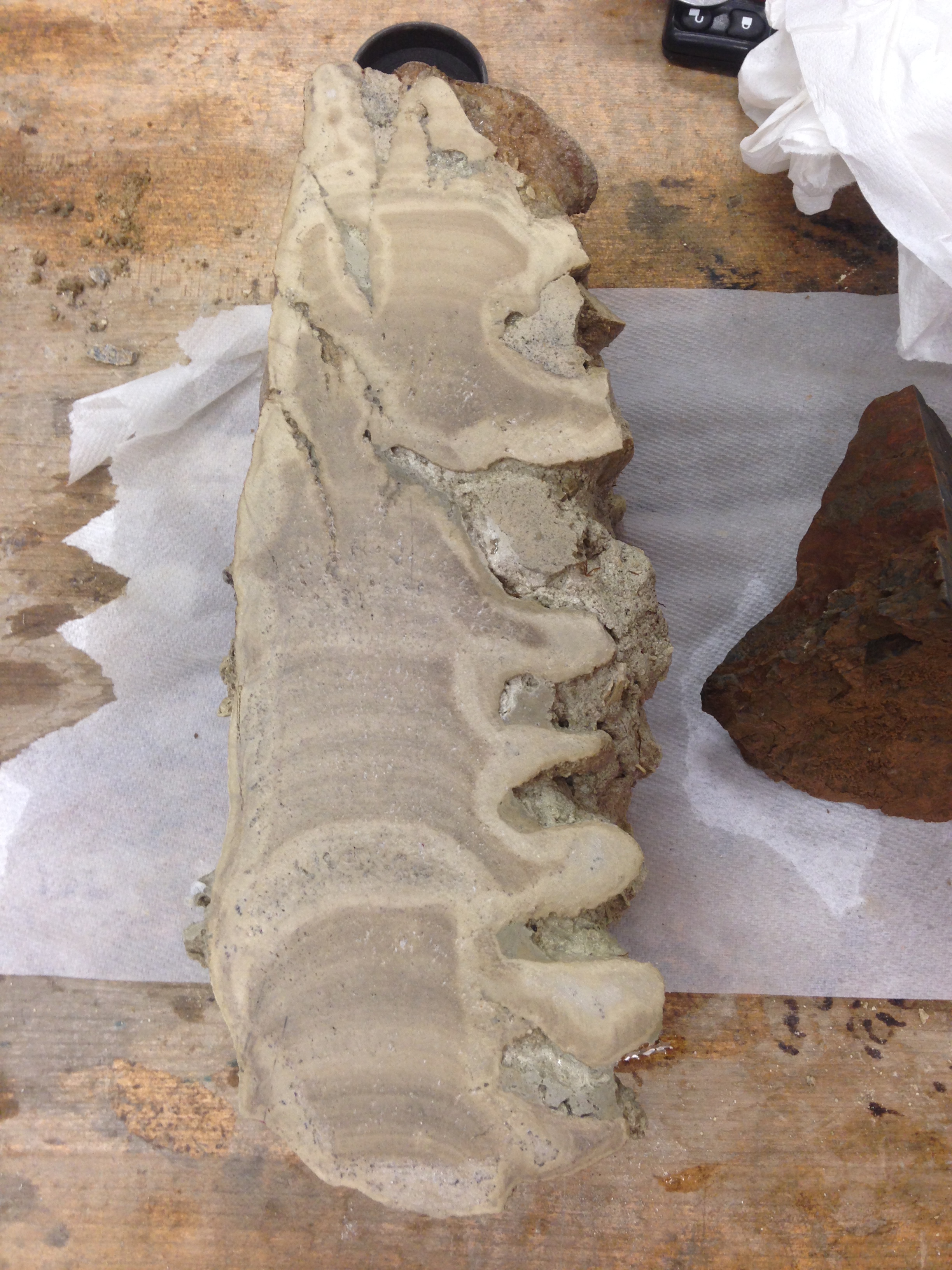 There are growth patterns up and then off to the side, just very cool.
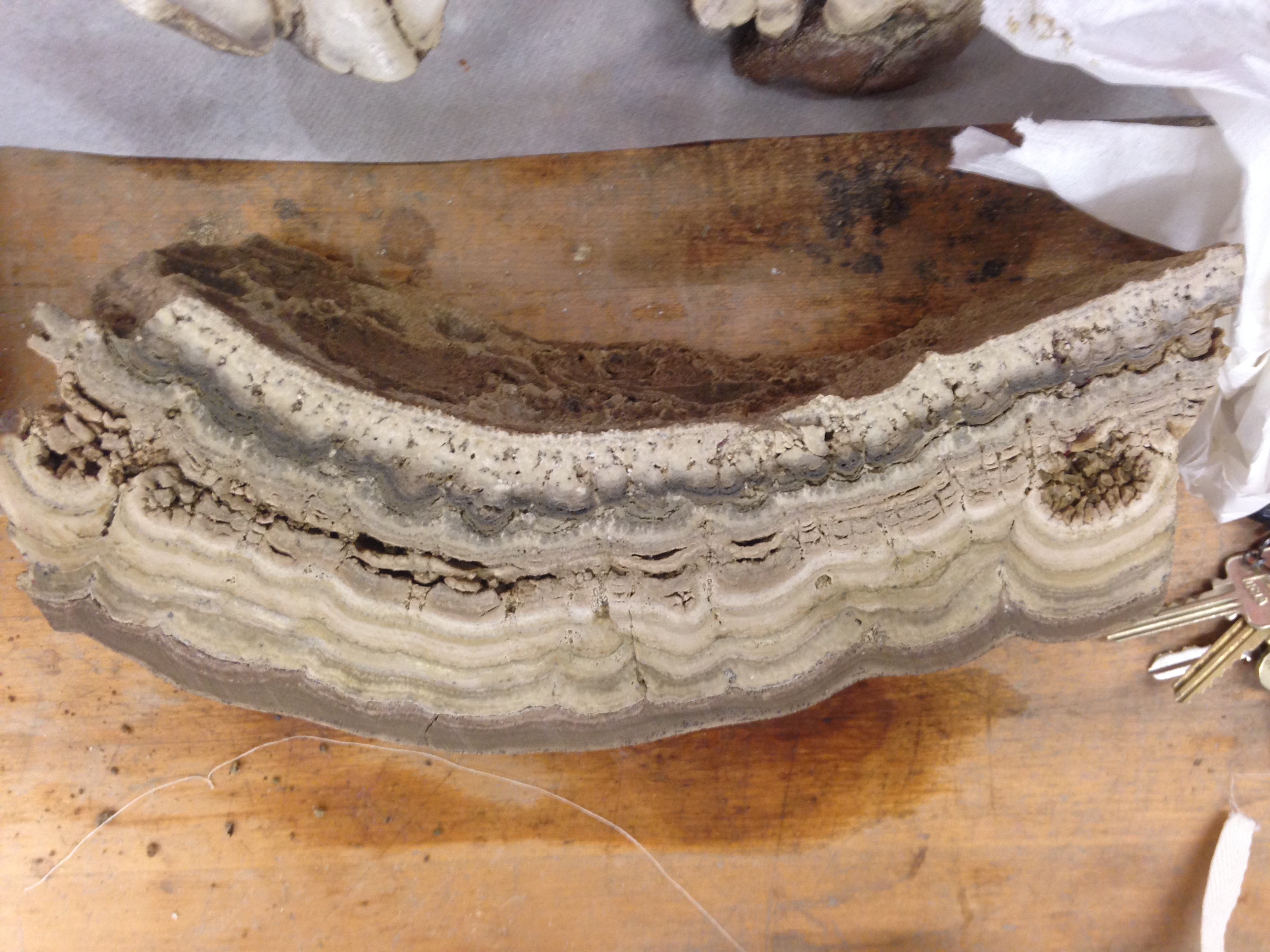 This one is upside down but you can really see the great laminations.
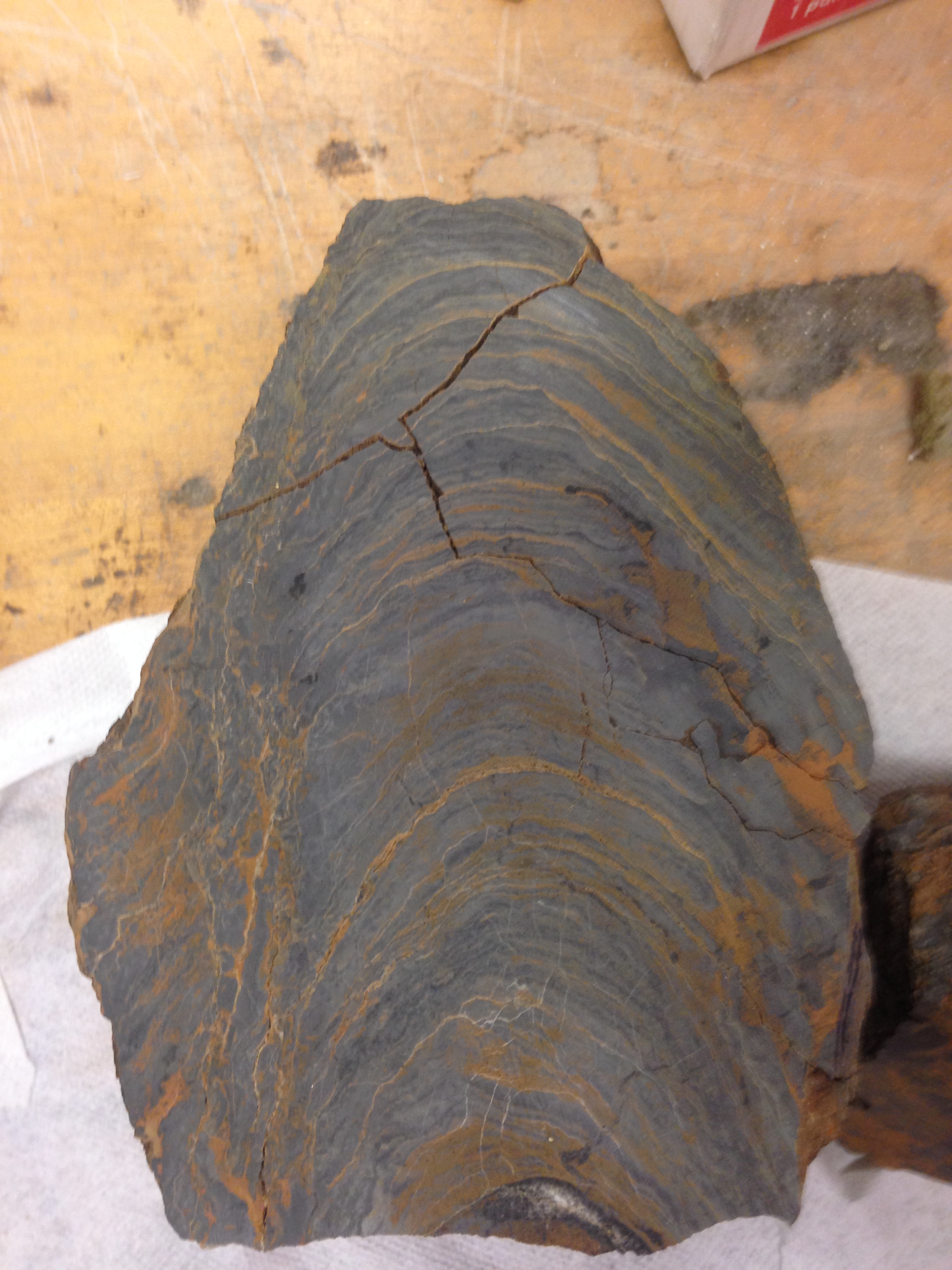 And then another great ~540 million year old stromatolite from Mt. Dunfee.
Petrography and rock saws are awesome!
I got the chance to sit in on some of the geology rotations today. It was more fun than doing all the stuff I otherwise should be. First off was petrography. Did you realize that if you slice rocks thin enough, you can see through them (being a little facetious)? You can indeed. By doing so, you can see how the mineral crystals formed, get a good idea of what they are made of, and tell a history of how they changed over time. I know, this was new to me too.
The highlight was looking at a sample of rock from the Gunflint Iron Formation (Northern Minnesota). This specimen came from a rock that is ~2 BILLION years old and there were nearly perfectly preserved fossils of filamentous microorganisms. No joke, this was an example of one of the oldest, best preserved microfossils anywhere. Did I mention that they were 2 BILLION years old? I am still reeling from it. Pretty darn cool for a microbiologist who is used to looking at modern filamentous microorganisms and trying to think about how they might tell us about ancient environments that are preserved in the rock record. There they were, right IN the rock record.
In the afternoon, I was also able to use the rock saws and rock polishers to cut and polish some of the stromatolites that I collected at Mt. Dunfee. Here is one of my favorites below. This is the top of a stromatolite that is 542 million years old. The layers of the ancient microbial mat are preserved in this rock. You can see the top of the stromatolite in the picture below.
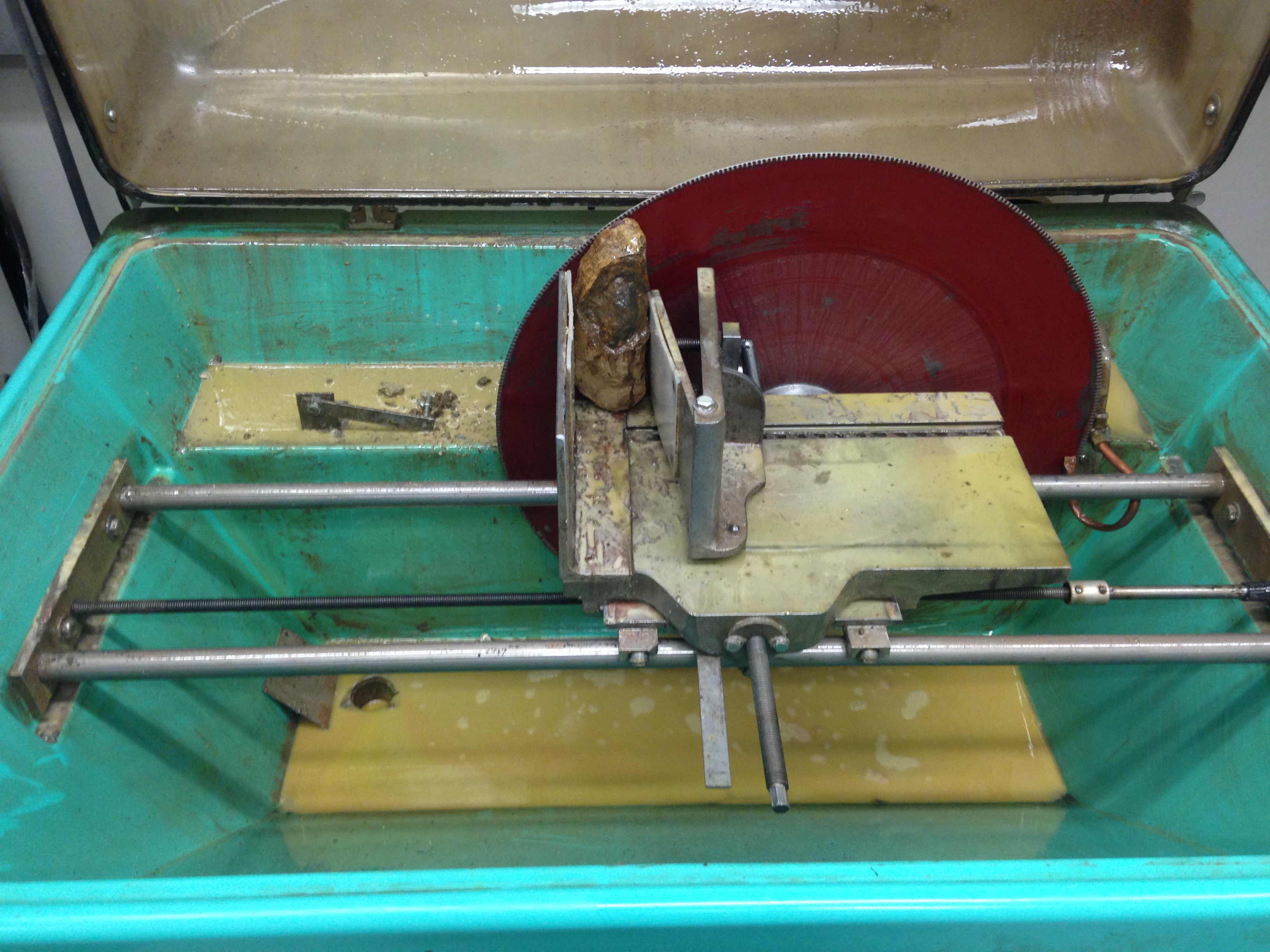
Rock saws are awesome.
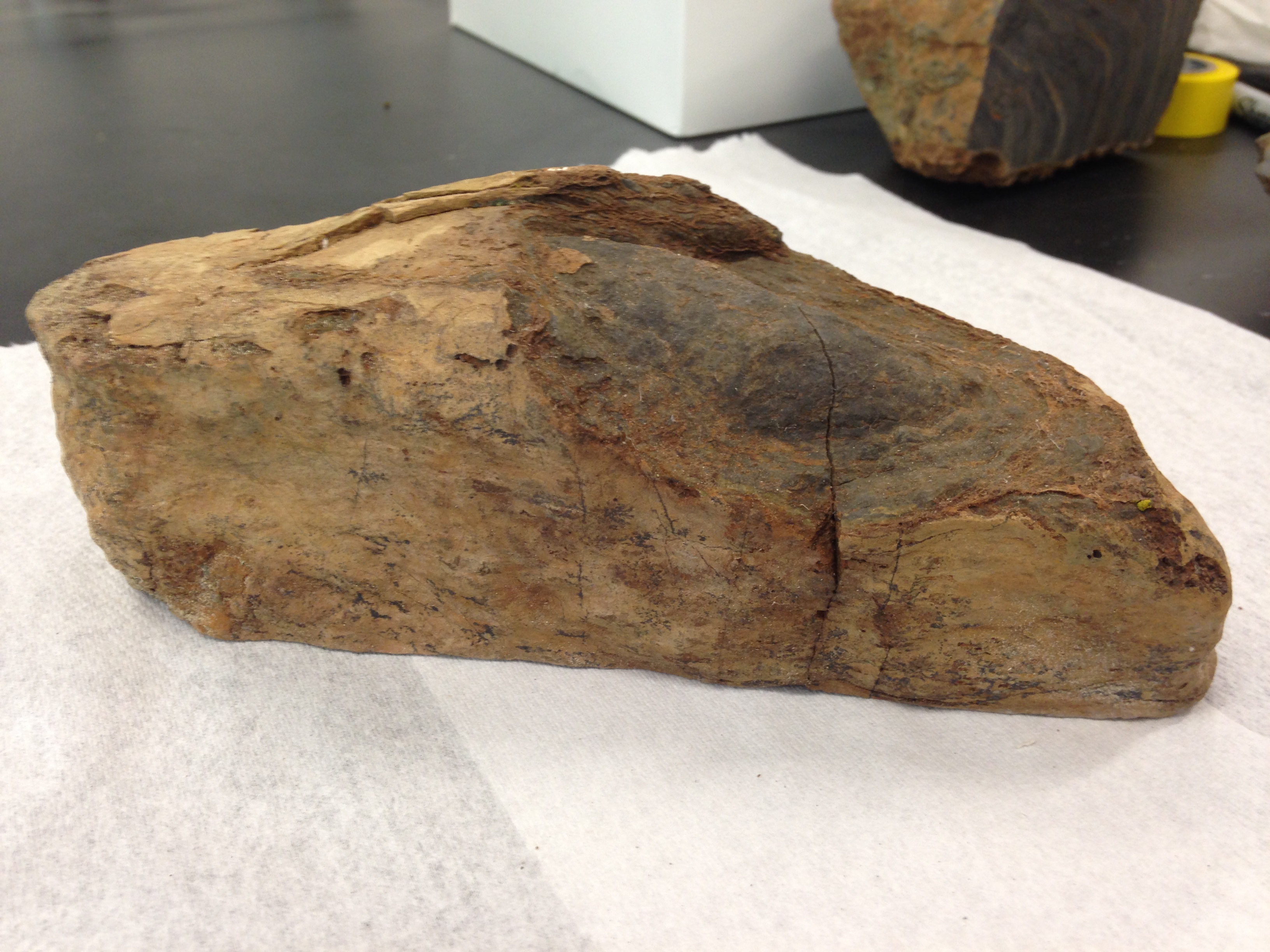
Turn it on its side to see the bottom…
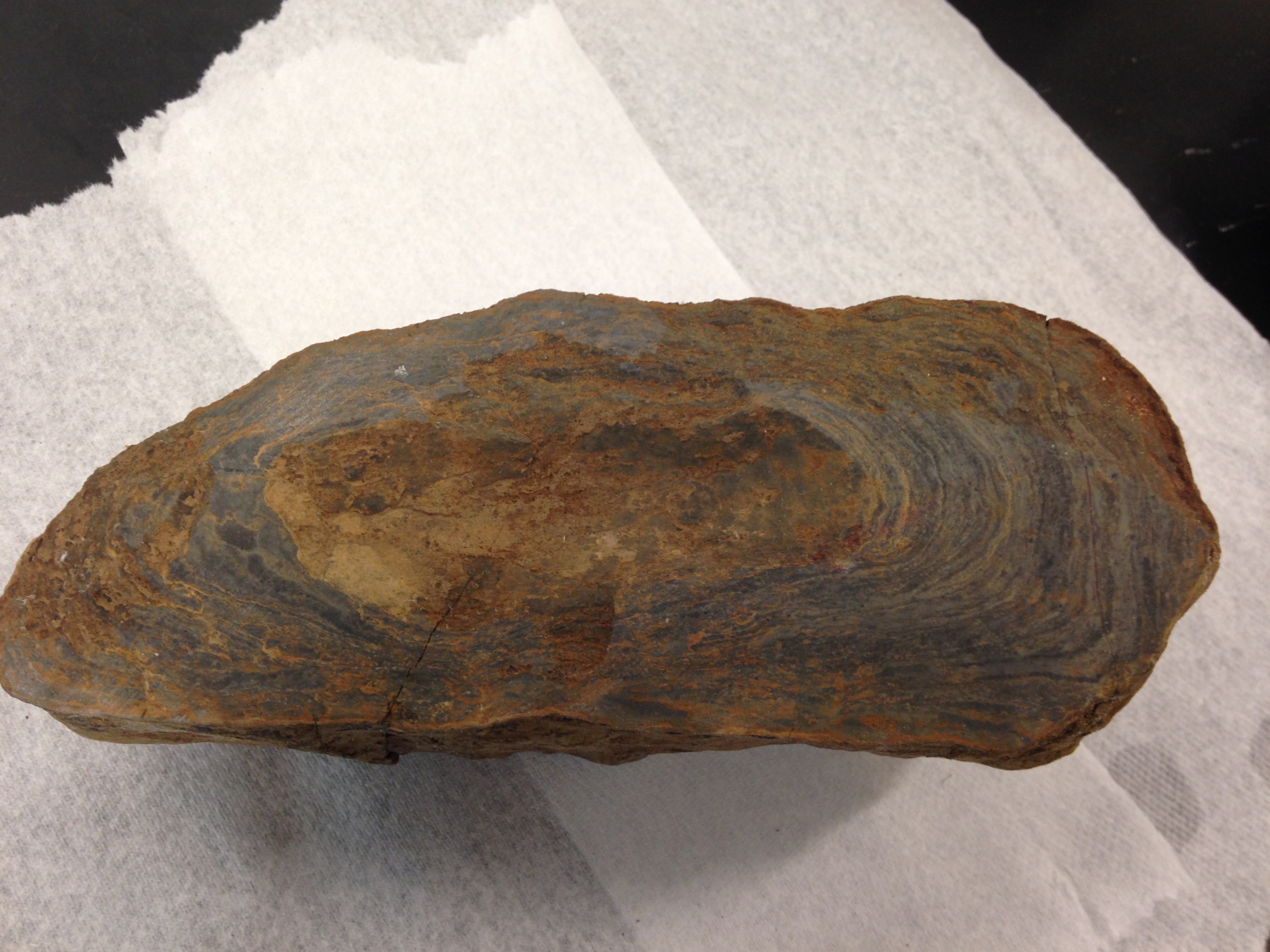 See the rings?
This is like the end of a loaf of bread.
Then I cut two other stromatolites in half to see the individual layers and stromatolites (individual towers).
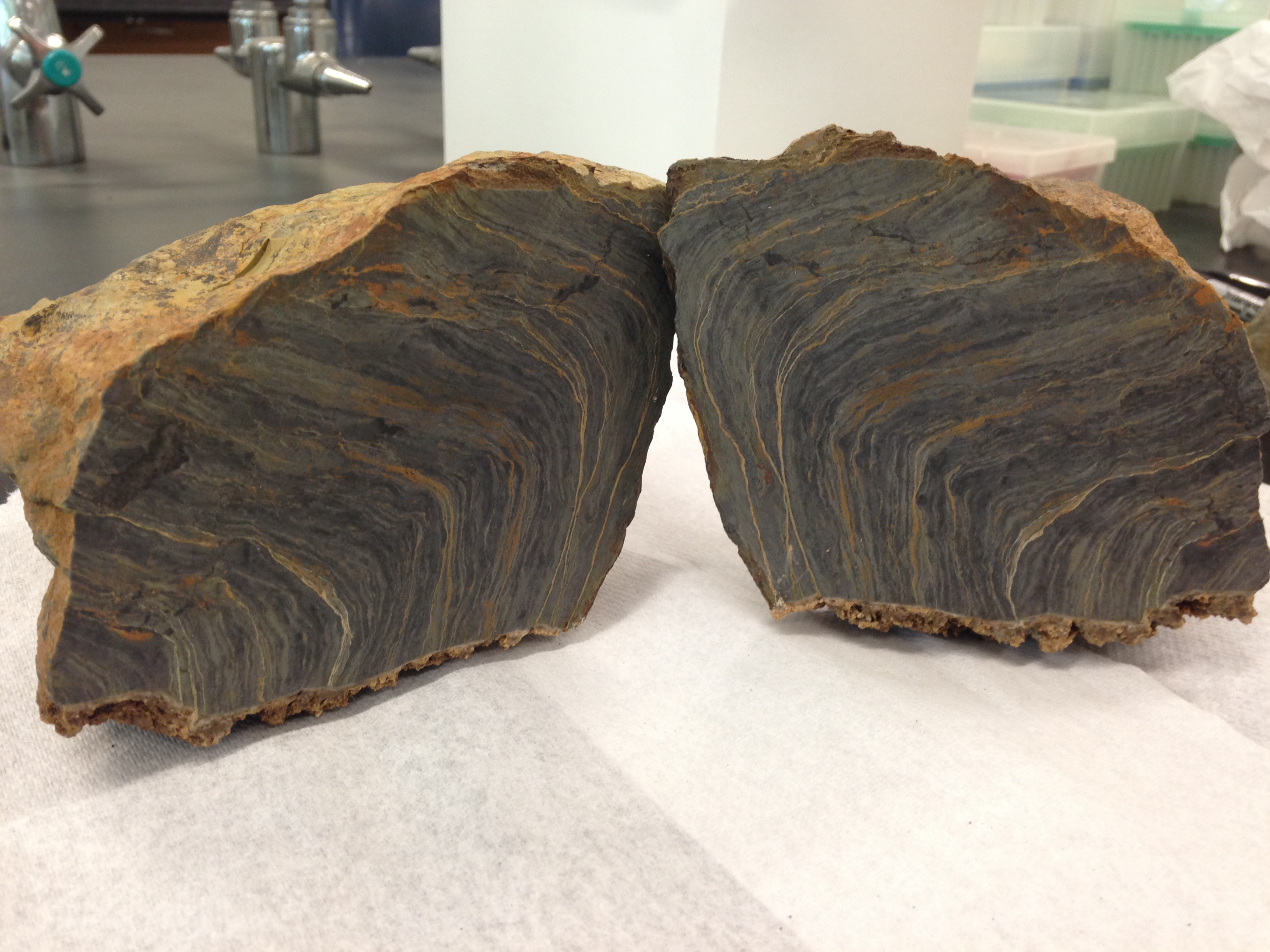
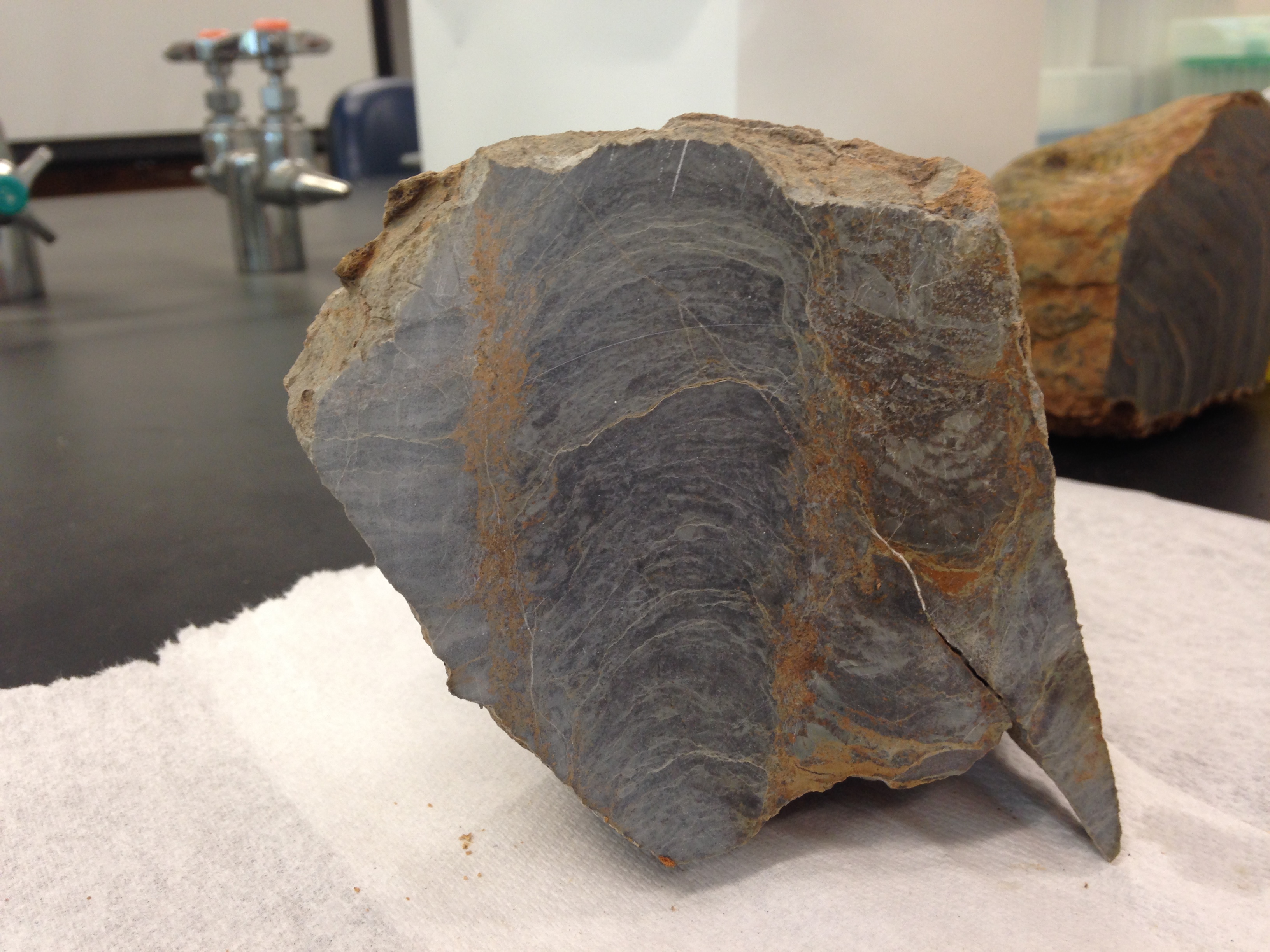
These are fossilized layers of microbial mats that get covered in something like silt or sand and then the microbes grow back over it, locking in the structure in the sediment of a shallow lake or sea. This was a time when there were very few forms of life that had shells or skeletons, making these some of the only fossils of life from this time in Earth’s history. Cool.
Sitting in on the bioinformatics workshop…
Modern molecular microbial ecology uses powerful sequencing technology to generate enormous amounts of data. Our ability to process and analyze (read: understand and use) this data lags way behind. Knowing how to use computational tools (bioinformatics) is essential. So, one of the rotations this week is dealing with a suite of programs that helps us analyze sequence data.
It goes something like this…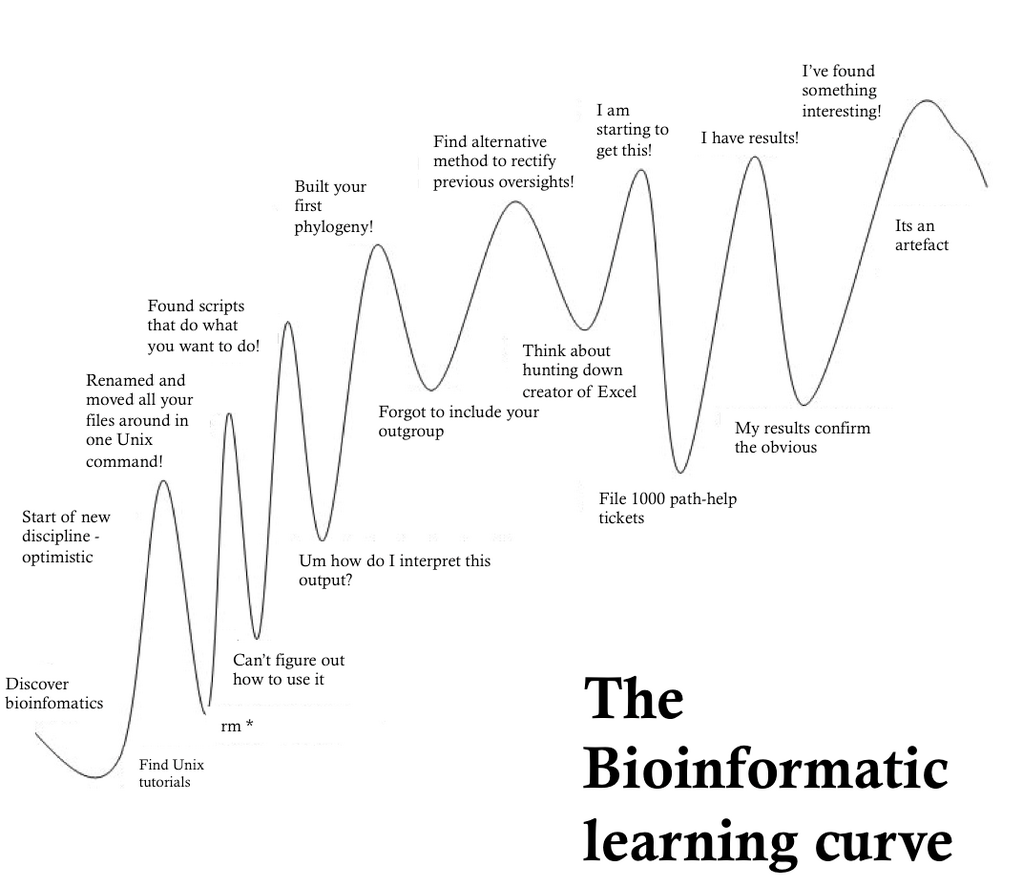
Second series of rotations at Cal State Fullerton
We had Saturday off after the first round of rotations. I took the opportunity to go see a dear friend from college Sean Bolger. Sean came out to LA to try to make it as an actor about a year and a half ago. I hadn’t had much contact with him since then and before so this was a great opportunity. Sean’s arm will be seen in “The Jersey Boys”, handing a guitar to someone. Seriously though, he is a great actor and is getting noticed. I figure I got to hang out with him RIGHT before he got famous. So, I rented a car, drove from Fullerton to the other side of LA and *poof*, there I was. We had pastrami sandwiches at an LA classic restaurant, Canter’s Deli. Guns ‘N Roses used to hang out there I am told. It was great and we got a chance to catch up.
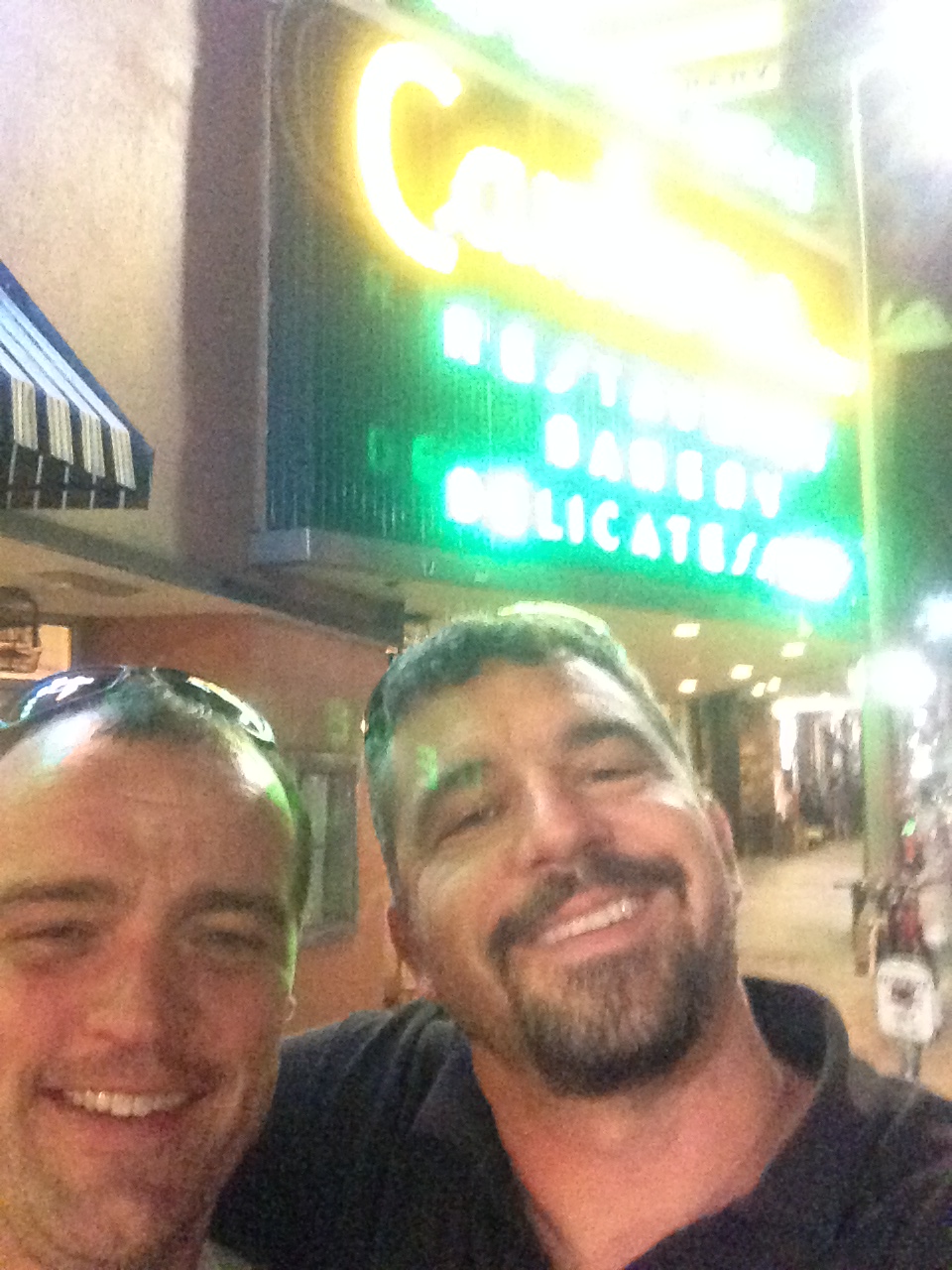
Then we went to see Dan O’Dair, another friend from college. It was a great break from the course and I got more thrilling LA driving time!
Today, the second rotation began. We are not doing one, so instead we are finishing preparing our samples from the week and getting ready to send them to get sequenced (read: lots more work in a week). I got a chance to focus on some work that is badly needing attention and look around and smell the roses. Very nice.
Here is a valencia orange tree on campus. All of the oranges within picking height are gone, I tried.

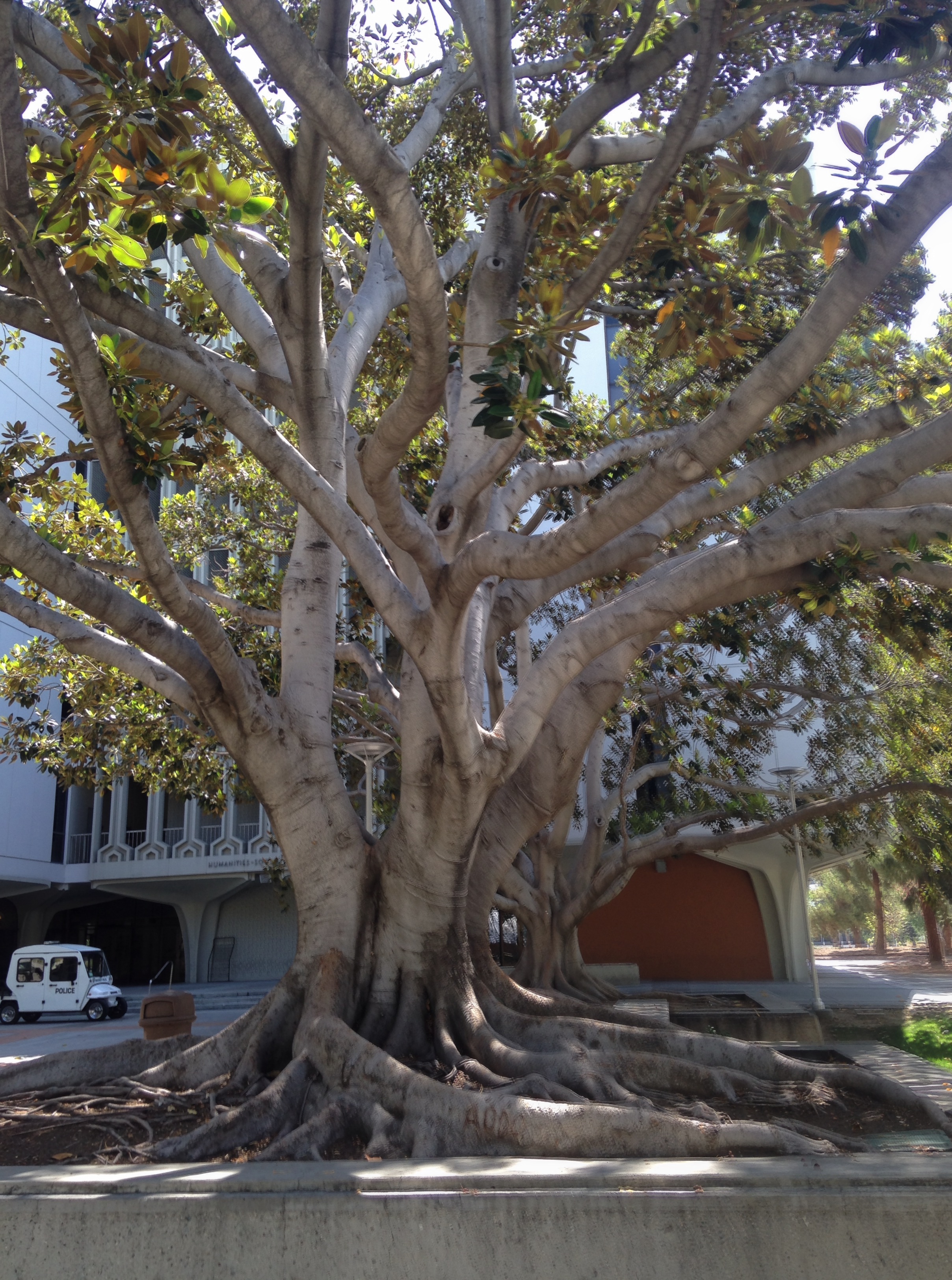
I also took a picture of a Magnolia tree, they get so big here. No fair.
The students continue to amaze me. They are on week 3 or so and going strong. Here is a picture I took when I called a group on excessive cooperation.

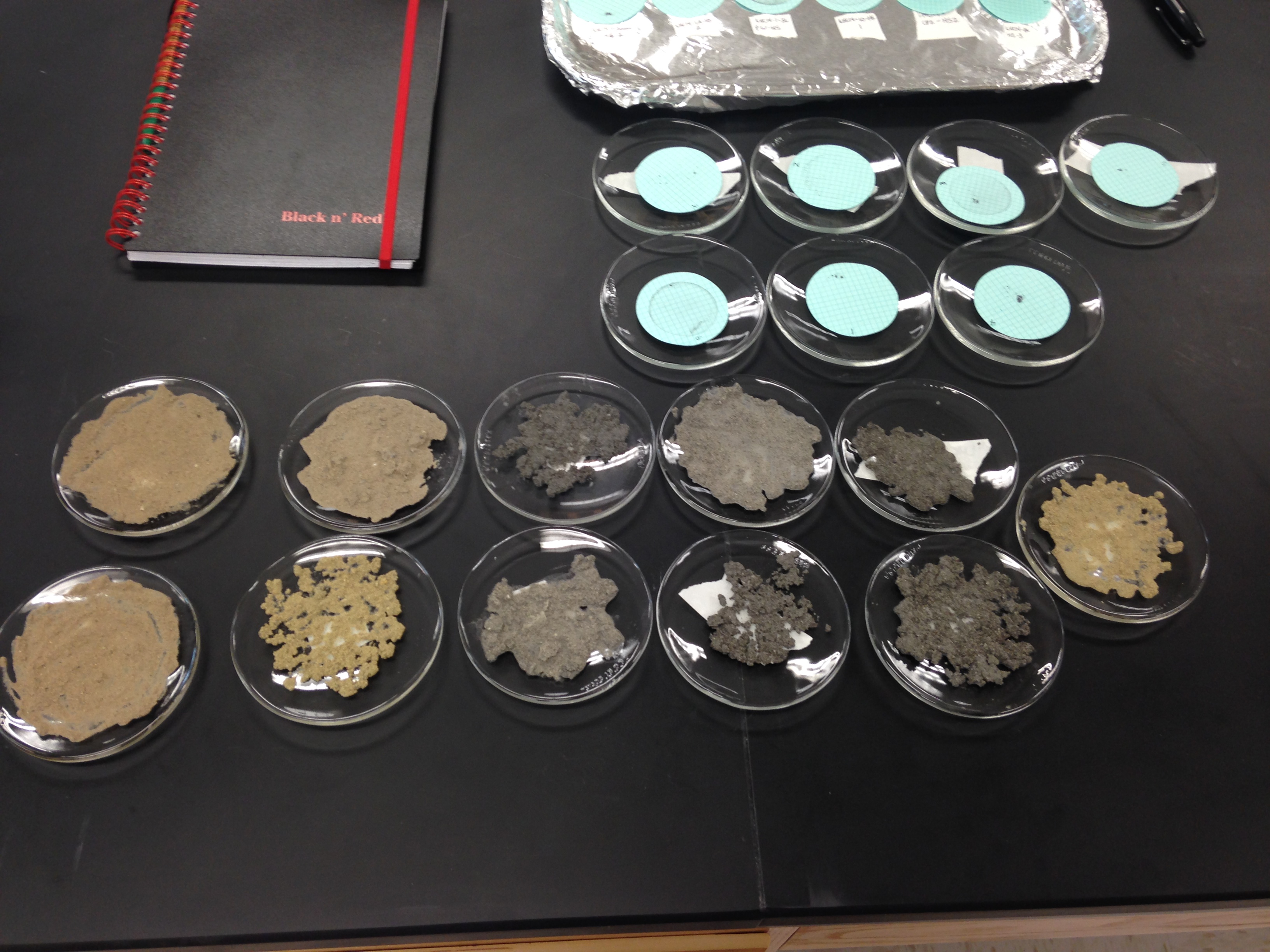
And last, a picture of some of the samples that are being prepped for chemical analysis. We extracted DNA, which took mucky and rocky samples and turned them into small volumes of clear liquid (containing DNA), the geologists still work with what looks like rocks but ground up. It will be interesting to see what they find and compare it to our work.
Journey Down a Hot Spring
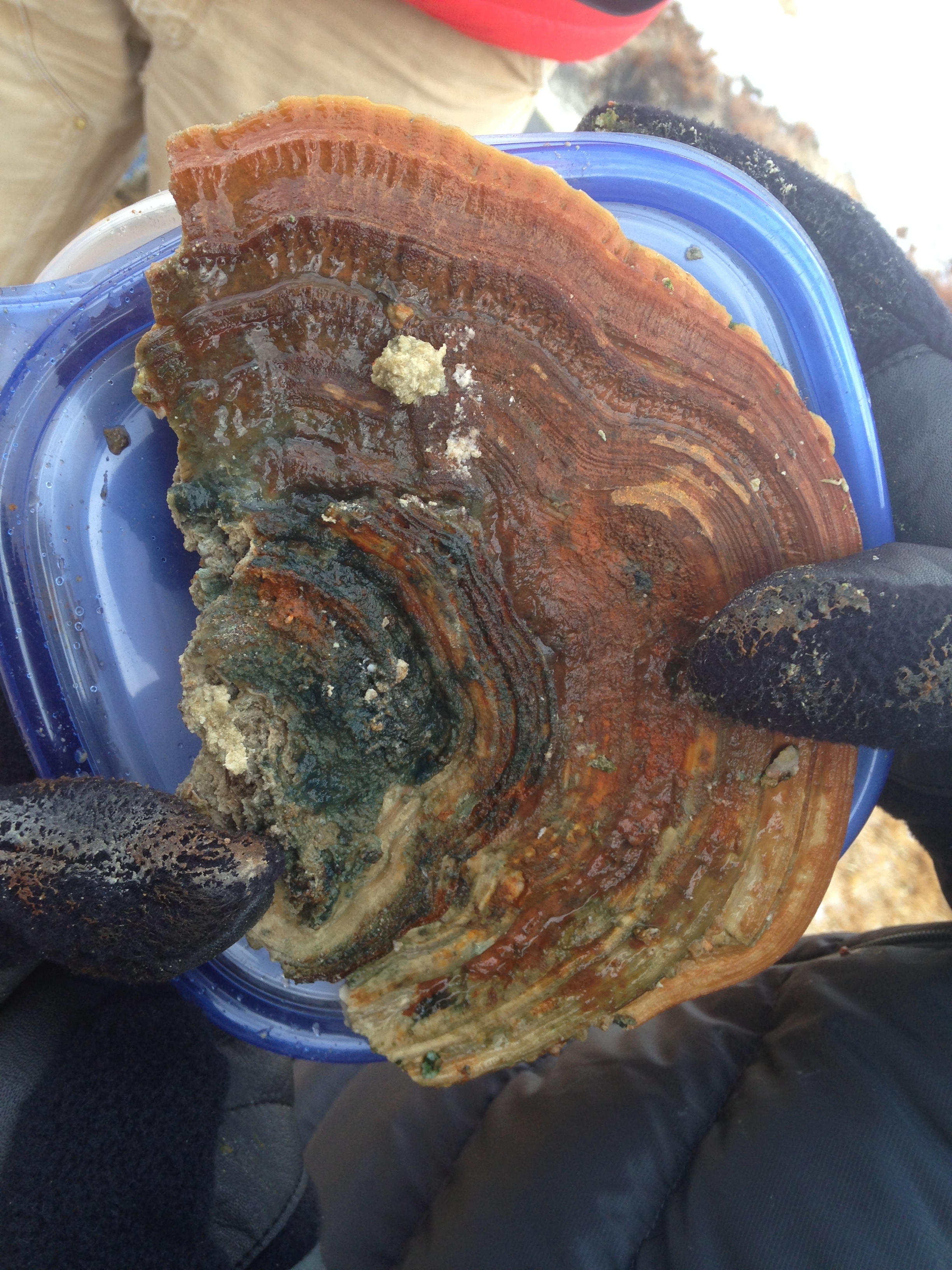
This video was taken at Little Hot Creek by taping my GoPro camera to a crowbar and submerging it into a hot spring. Notice the bubbles on the underside of the carbonate growths. The green and orange are microbial biofilms associated with the mineral that is precipitating on the side of the spring.
Wait until the end of the video for some great shots of the inside of the spring itself. At the very end, we were concerned that we had cooked our camera (88 oC, ouch!) because the wifi kicked out but it came back to life.
Day 13: Last day of the first rotations…
We have really been at it over the last three days. Today I will say the same thing for the 4th and last time. In all actuality, each subgroup of students has been a little different in regards to their background, experience doing molecular biology and their personalities. These come out in interesting ways…dealing with a group, doing new research, under pressure of not being the slowest member of the group. I am sure there is an interesting sociology project in there somewhere…
We are getting good amplification of just about every sample we have extracted. This means that we are going to get the sequence data we need to determine which bacteria and archaea are present at all of theses sites and their relative abundances. This is what we set out to do…a good thing.
Ok, foodie break. We went to a new bakery and cafe that opened up in Fullerton. It is called 85 oC Bakery Cafe and is a huge chain in Taiwan. Man, the pastries are awesome and I had an iced coffee that will have me coming back there soon.
Day 10: First set of lab rotations at Cal State Fullerton
CSUF has been our home for the last 2 days and will remain so for another 8 days. This will take us through two rounds of lab rotations. There are 4 groups of students, who rotate through 4 lab exercises in the first week. Then, they will rotate through 4 more the second week. My graduate student (Blake Stamps) and I have been responsible for taking each group through extraction of DNA from samples collected in the field and amplifying the rRNA genes of bacteria and archaea. For those who don’t know, we can use these genes to determine which microorganisms are present in a sample and relatively how many there are of each type. This is a big deal. We have over 60 samples and will be sequencing between 1,000 and 10,000 genes from each sample. We will use this data to see how the microbial communities change with distance to the hot spring source, depth in microbial mats, and that are associated with geological features like the carbonate nodules that form on the side of the creek (see below).
https://www.facebook.com/photo.php?v=706093256119761
Day 8: Early start, 6 hours to Cal Sate Fullerton, 3 1/2 hours of safety training…
Today we had to get from Mammoth Lakes, CA to Cal State Fullerton in time to attend lab safety training. This is not a good way to start any day. So, we loaded up the caravan and got to it, on the road by 6 am. We stopped at Erik Shat’s Bakery in Bishop, CA (of course) for breakfast. Frank Corsetti, John Spear and I then got the vans gassed up (23 gallons, $97 for mine…ouch). While waiting, I saw the lentricular clouds below.

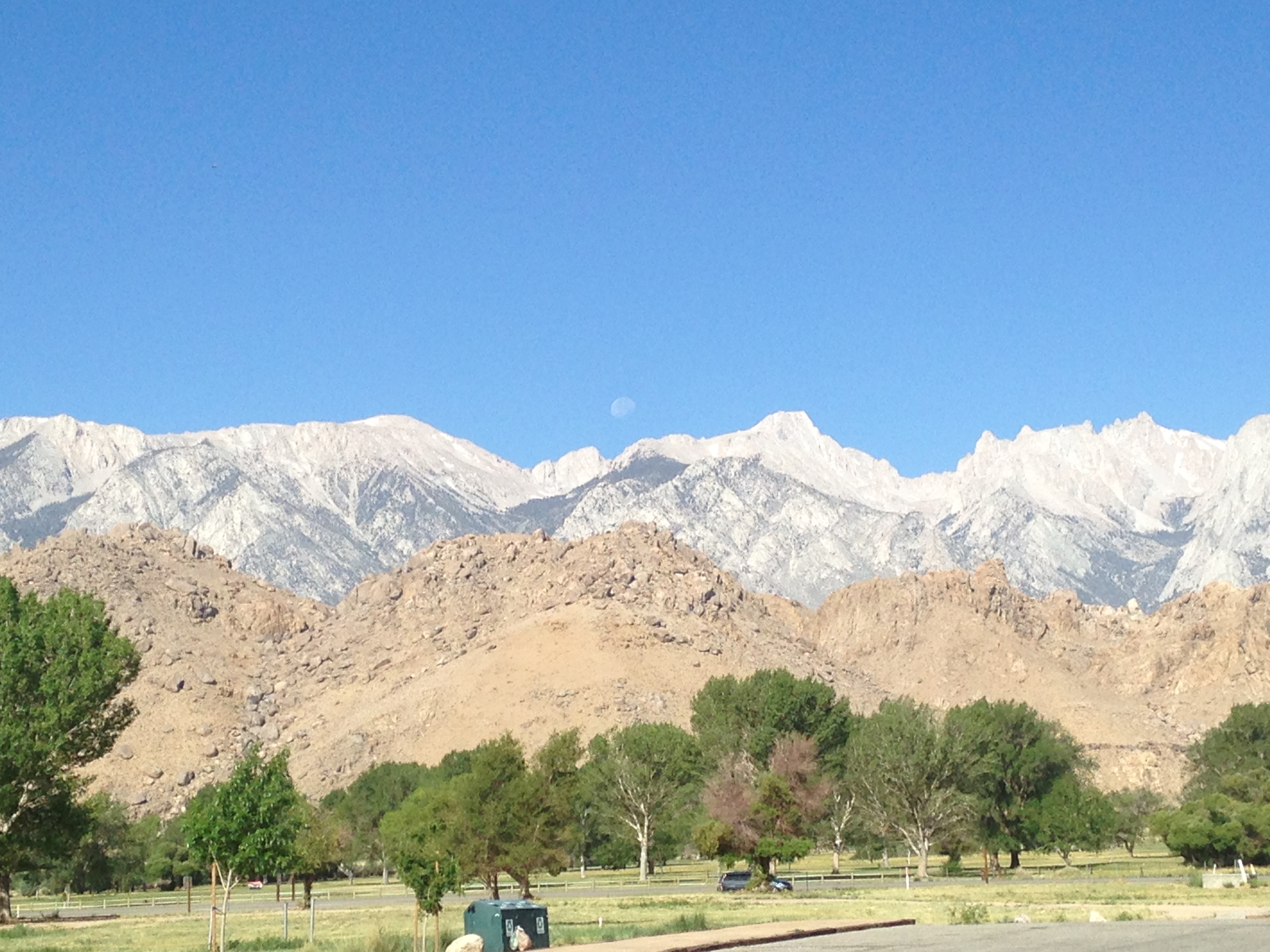
Potty break at Lone Pine, CA visitors center never disappoints for giving a view to remember…
All the way to Cal State Fullerton and a 3 1/2 hour Lab Safety Training. Somehow, I was the only instructor who either wasn’t able to find a way out or didn’t already qualify for CSUF’s safety credentials, splendid. There was a moment of levity that almost made up for it…fire extinguisher practice!
https://www.flickr.com/photos/124141475@N07/14444245925/
Day 7: Getting our full science on at Little Hot Creek
After much recon and deliberation, we came up with a game plan for Little Hot Creek. That morning, we arrived shortly after 8:30 am for a full day of science. The local soaker hippies had a party the night before that lasted until sunrise. Needless to say they were not thrilled to see the white Suburban and 2 white vans show up so early.
Once we got at it, the students worked hard, were focused and did a great job. We did a complete transect of the primary spring, focused on some of the microbial mats and then focused on some “cone” structures in another pool with microbial mats. All of it was really interesting and totally unknown. On top of all that, it was a beautiful day…
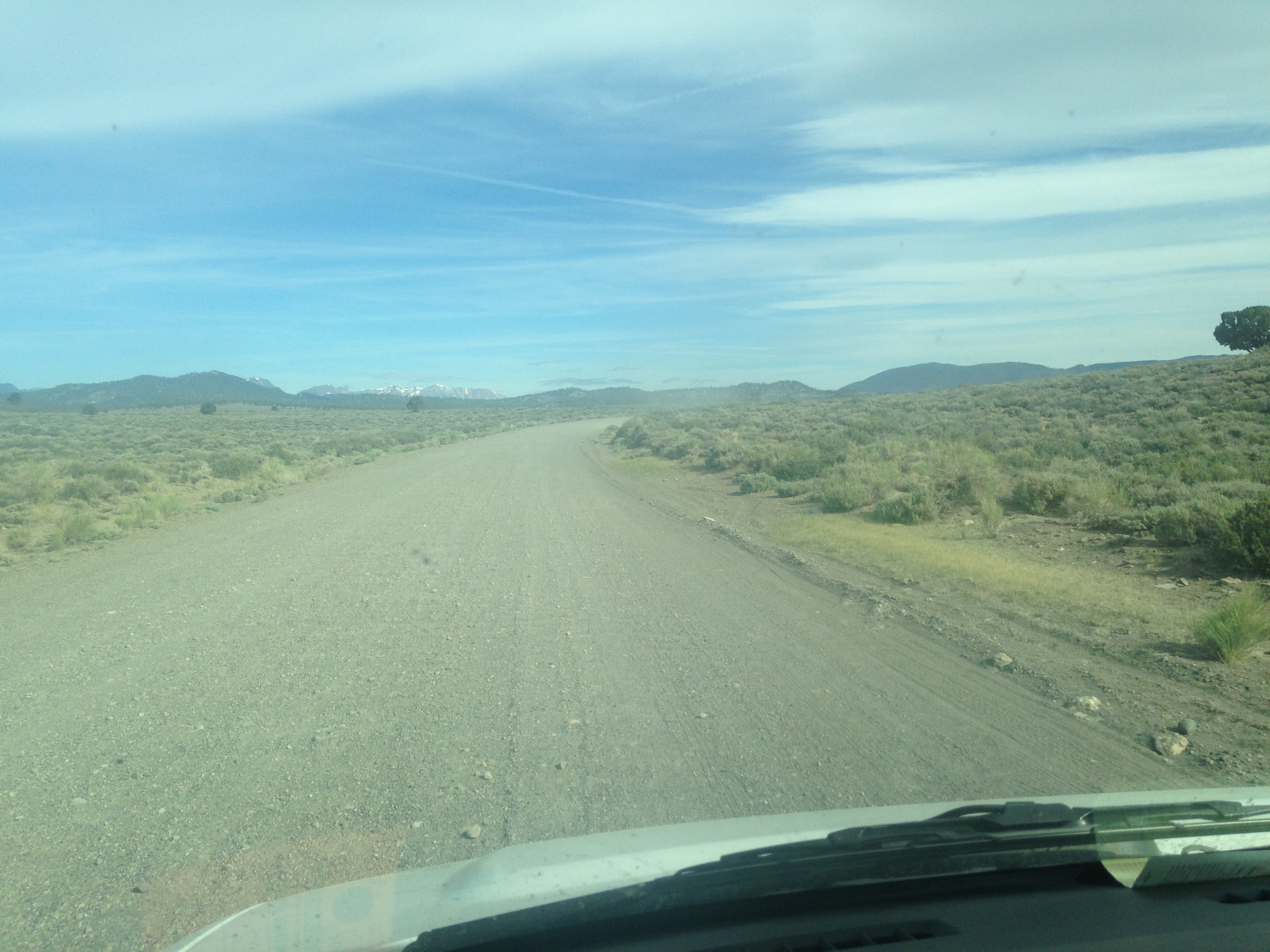
Here is a shot of us going out to Little Hot Creek. It was several miles of dirt road. I am glad I was not in the back of the van. The students back there were pretty green by the time we got there.

So, you can see the orange and green (in some parts) microbial mat here in this picture. There is a hot spring coming up behind the white carbonate rock in the foreground. The water here is only 45oC. The microbial mats are thick and well layered.
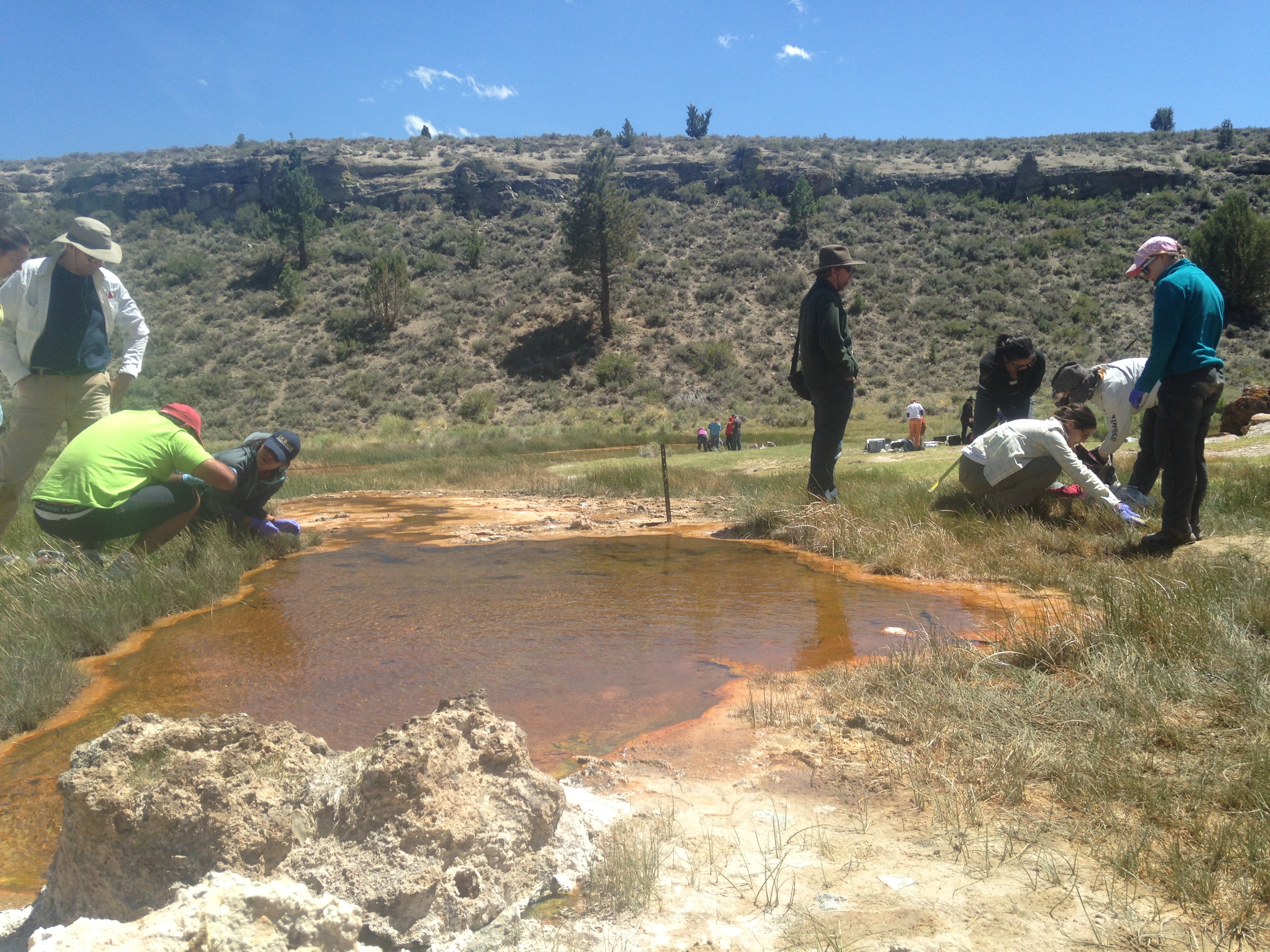 Students and John Spear (white shirt, goofy hat to left) working on the mats and cones at the LHC-5 pool.

Brain-like structure that forms from the splashing waters of LHC-1 spring…
 Brad and John Spear rejoice in the rewards of a full days worth of Geobio2014 getting their science on! What this really represents is a TON of work in the lab this week and a crap-ton of sequence data on Catalina to analyze!
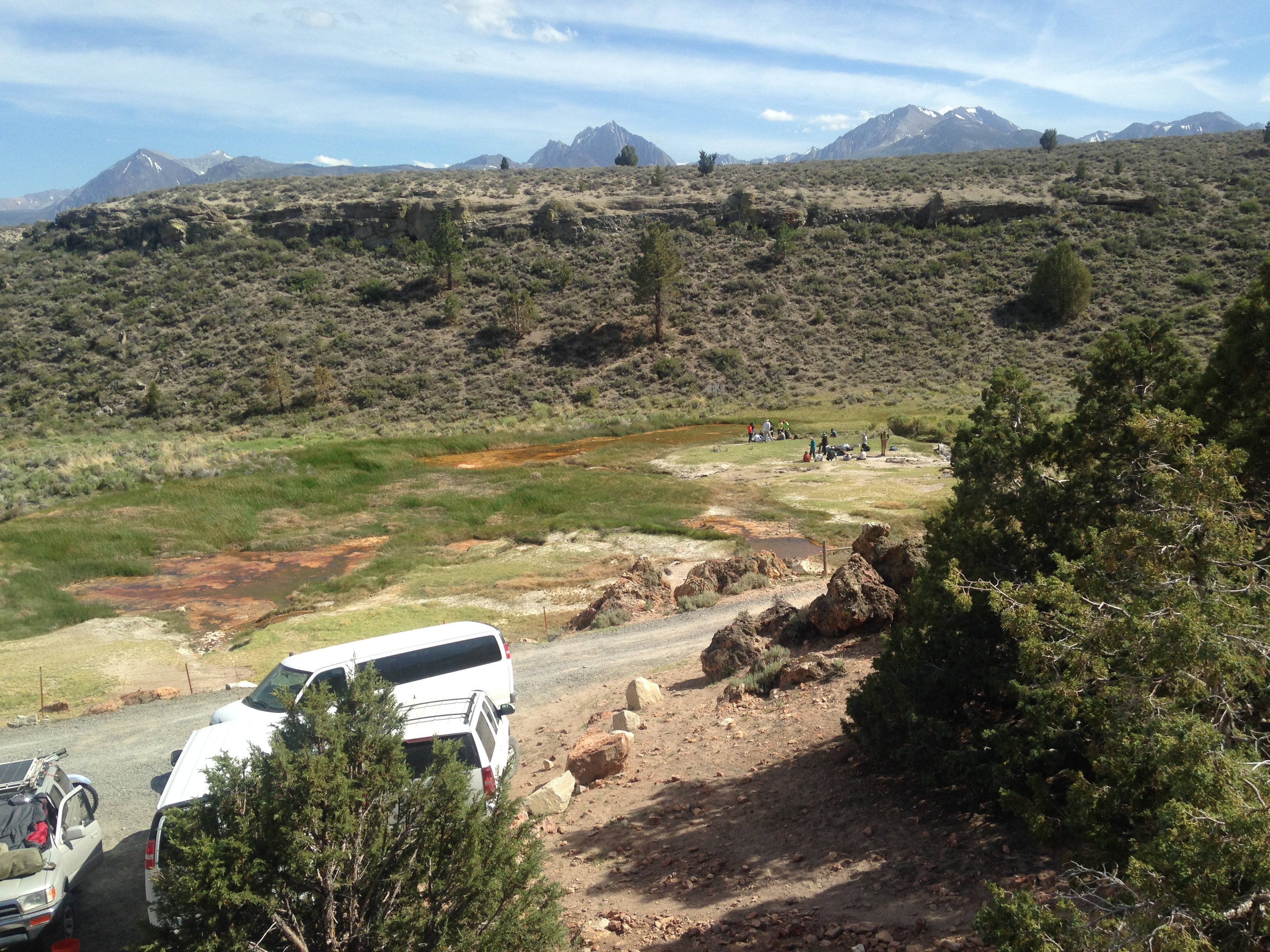
A shot from above…
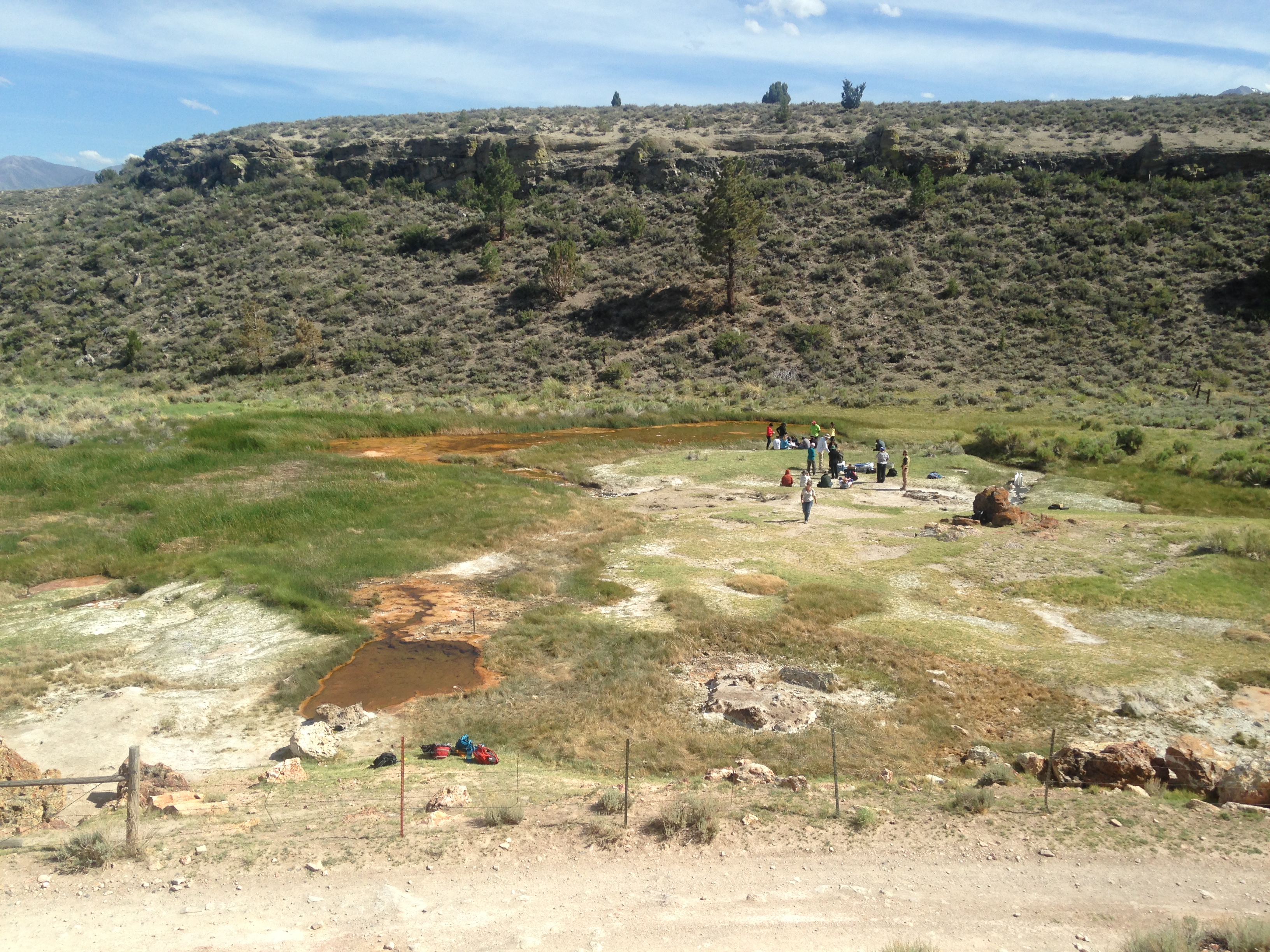
The whole group working late into the day…
 bradleystevenson1120